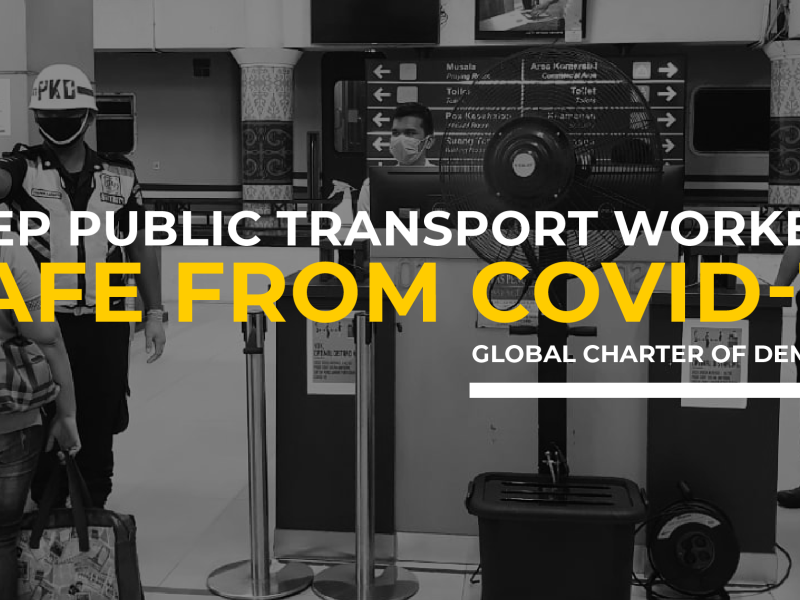
Frontline public transport workers from around the world have united to publish a global charter of demands for better protection from the Covid-19 pandemic.
Hundreds of public transport workers across the world have died from Covid-19, with the death toll rising daily. They are on the frontline of the battle against Covid-19. They are the drivers, ticket sellers, conductors, cleaners, maintenance and office workers who provide the vital services that keep public transport running – allowing other critical workers to get to work to ensure that the sick are cared for and shelves are stocked.
However, inadequate health and safety standards have exacerbated the risk to public transport workers while doing their critical jobs through this crisis.
Frontline public transport workers and representatives from transport workers’ unions spoke about the reality of facing the Covid-19 pandemic at an online media conference hosted by the International Transport Workers’ Federation (ITF) (watch here): https://youtu.be/KeUVdnVlL7M
Vivian Acosta, a ticket seller in Bogotà, Colombia, and member of the SNTT said: “I feel at constant risk. We don’t have the protective equipment we should have, buses are not being cleaned and disinfected as they should be, we have no sanitation facilities to help us keep clean as we are expected to use facilities at cafes and shops, which are closed now. It’s a constant struggle with the company to get them to fulfil their duties.”
Internationally respected health and safety expert, Professor Andrew Watterson from the University of Stirling, endorsed the ITF charter of demands: “The best way workers can protect themselves is to join a trade union. This ITF charter is evidence-based, comprehensive and should be adopted by all employers as good practice for protecting their employees. Employers and governments must recognise that public transport workers are key workers and at significant risk from Covid-19, they must protect them and compensate them for this. Workers’ health is public health, and if you protect public transport workers from Covid-19 you protect the public and your society and economy.”
ITF general secretary Stephen Cotton called on governments and employers to act: “Governments and employers have a duty of care to workers, and the ITF will join forces with others to get Covid-19 recognised as an occupational disease. We will not accept more infections and deaths of workers who provide a key service but are needlessly being exposed to deadly risks. With the several independent occupational health and safety organisations that endorse the charter, we will work together to ensure that every worker gets the protection they deserve”.
The global charter includes six top-line demands that must apply to public transport workers regardless of their job description, contractual arrangement and employment status and be responsive to different genders and migration statuses:
- Adequate and appropriate personal protective equipment
- Working conditions that minimise transmission and facilitate social distancing
- Access to health measures that protect the vulnerable and sick
- Recognition of the key role of public transport workers
- Regular information and reporting on workplace risks and workforce health
- Trade union rights
Representatives from transport workers’ unions in North America and a bus driver from London spoke about the enormous toll that the pandemic has had on the lives of transport workers across the United States and Britain.
John Samuelsen, International President, TWU (United States): “Things are so bad that a day I don’t wake up to news of a member’s death is a good day. Today wasn’t, we have two fatalities”.
John Costa, International President, ATU (United States): “We focus on safety. We are here to work but we did not sign up to die!"
Taj Salam, Unite bus driver, London: “At the start of the pandemic, safety of drivers was nowhere to be seen. We insisted on PPE as workers. Initially, we were given disposable gloves which were not suitable. We had to fight for proper PPE”.
Organisations endorsing the charter:
Collegium Ramazzini
National Council for Occupational Safety and Health (National COSH), USA
UK National Hazards Campaign, UK
Centre for Public Health and Environmental Development, Nepal
Scottish Hazards Campaign, Scotland
Occupational Health and Safety Centre, Mumbai
Andrew Watterson PhD is a professor of health and a member of the Occupational and Environmental Health Research Group and Public Health and Population Health Research Group at Stirling University in Scotland. He is also a chartered fellow of the UK Institution of Occupational Safety and Health and a fellow of the Collegium Ramazzini, a leading global occupational and environmental health organisation. He has worked on projects for the WHO, ILO and FAO on worker health and safety. He has written widely about occupational health and safety in books and journals including the Lancet, BMJ, Occupational and Environmental Medicine and the Journal of Epidemiology and Community Health. He is especially interested in risk management and occupational health impact assessments and has recently published reports and papers on Covid-19.

Covid-19: ITF global demands for governments and employers
Podcast: Covid-19 and the future of public transport
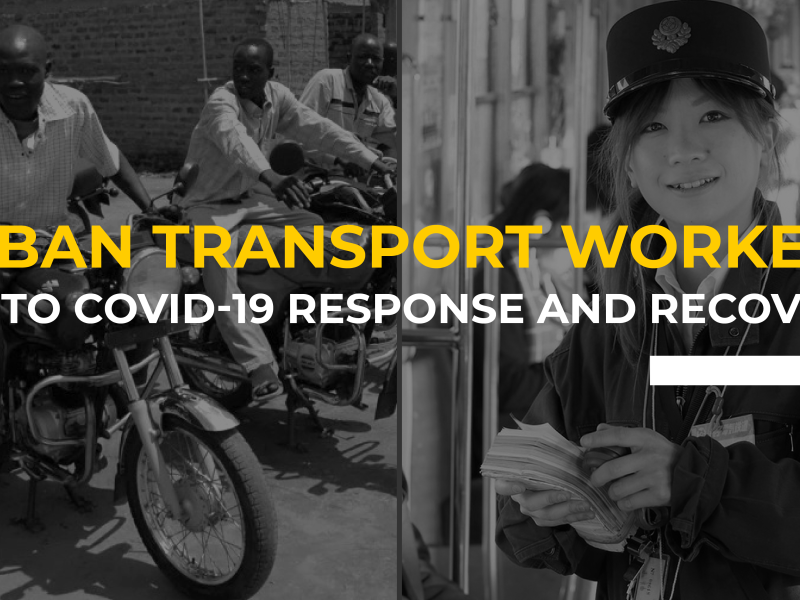
Covid-19: urban transport workers key to response and long-term recovery