2015 was a year of great successes for the ITF nationally, regionally and globally (see our 2015 review for more on this). However, the political and economic landscape continues to veer towards the right with dangerous precedents set for anti-worker legislation and activity in many countries.
The structure of transport employment has changed and will change further. Increasingly we are seeing workers pitted against one another as casualisation and deregulation continue to gather pace in our work places. Trade union rights are under attack in many countries and workplaces and many workers are bearing the brunt of discrimination and harassment from the type of employer determined to gain commercial advantage by attacking labour standards. Despite these challenges we are starting the New Year stronger and more focused than ever before with national affiliates and as a global movement.
It is hard to believe it has been 18 months since we came together at congress in Sofia to map out our path until 2018. That week in Bulgaria gave us the opportunity to consolidate our thinking and solidifying our priorities in the form of the four levers – a framework for tackling the do or die issues which will make or break the future of the trade union movement.
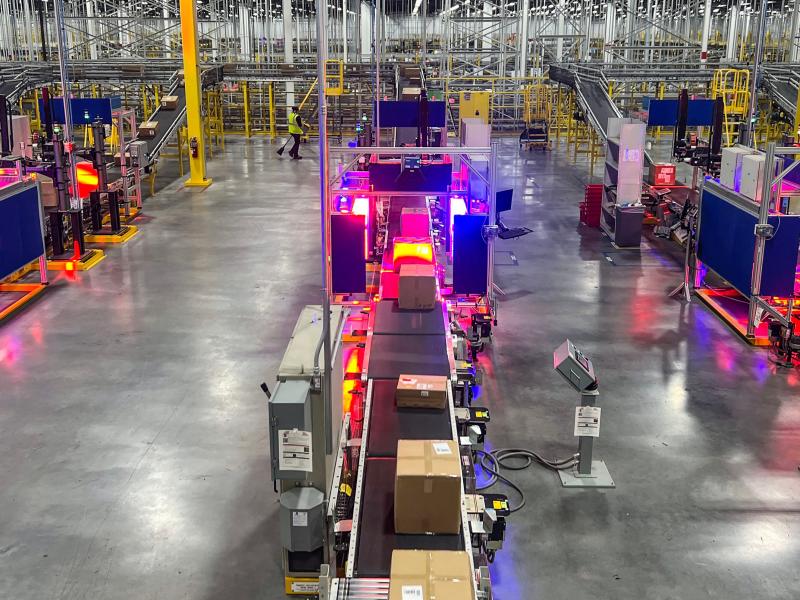
The first of these is consolidating hubs and corridors. We know that when talking about global trade there are strategic choke points and what happens at those points has a huge knock on effect through entire supply chains. We will go on harnessing the power of members and increasing membership at those strategic points whether they be logistics hubs, ports or airports. This will give the opportunity to not only bring about positive changes for those workers, but for the entire ITF family.
The issue of global supply chains will be on the agenda for the first time ever at the International Labour Organization's conference in June this year under the heading of 'Decent work in global supply chains'. We must make sure the voice of transport workers is heard loudly and clearly during these discussions which could have long term impact on working conditions in our sector. National delegations to the conference include a trade union representative. We urge ITF union leaders to investigate how they can secure this position for a member of their union so that transport workers have the best possible representation.
The second of the four levers is building our capacity to influence lead industry players so that we can be involved in setting standards across the transport sector. Multinationals are growing, with a handful of industry giants having the power to massively impact the lives of millions of workers. The influence of labour unions must be felt when decisions are being made within these multinationals that so acutely affect workers, their families and society as a whole.
In addition 2016 will see us continue our work with other global union federations to increase worker power across industrial boundaries. We cannot afford to ignore the links between transport workers and those in related industries.
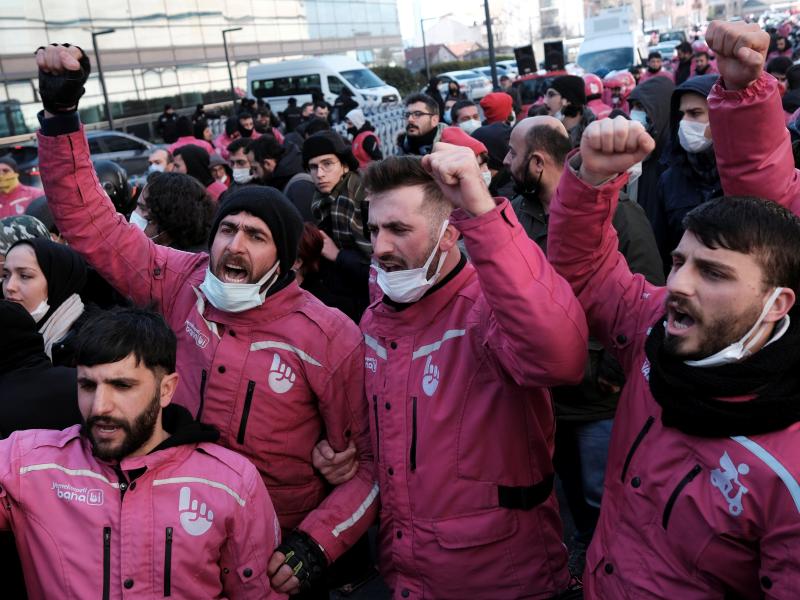
Mobilising mass membership is the third of the four levers and is of increasing importance as we are yet again faced with a global environment hostile to labour and social justice. We are the only mass democratic organisation on the global stage and that gives us unique power that we have a responsibility to maximise. Activating mass membership is about harnessing that unique power and being able to draw on our power base as and when we need to.
We will be furthering our work to build powerful alliances with civil society groups on the issues that are key to workers and communities; safety, sustainability, infrastructure, public services.
Finally, 2016 will see more research and strategic planning to follow geographic shifts and future proof our movement in line with the last of the four levers from congress. The global landscape is shifting with mega economies in China, India and Russia emerging. We will further union building programmes for important high growth countries, recognising the need for us to ‘follow the trade’.
Overwhelmingly the four levers and consequently the union-led ITF priority projects, are about redressing the balance of power in favour of ordinary, working people. They rely on us being a collaborative and transparent organisation that puts social justice at the heart of everything we do.
Yes 2016 will bring challenges, but it will also bring opportunities. We will continue to grow and develop and we will win for workers, for families and for communities because together that’s what we do.
We look forward to continuing to work with you this year on behalf of the billions of working women and men who depend on our great labour movement and our campaigns for social and economic justice, safe and secure jobs, an environmentally functional and sustainable world to live in, for transparent workplace and political engagement and democracy, and most importantly for a pervasive peace for all humanity regardless of religion, race, age or gender.
Viva ITF! Long live the ITF and all we stand for and strive to achieve.
In solidarity Paddy Crumlin, ITF president and Steve Cotton, ITF general secretary