The South Korean government is flagrantly denying workers their basic rights by issuing ‘return-to-work’ orders to truck drivers striking over safety laws.
The crude attempt at strike breaking has been condemned by the International Transport Workers’ Federation (ITF) which launched an online action today, coinciding with the International Day for the Abolition of Slavery, demanding that the government respects workers’ right to strike, stops ‘illegal acts of forced labour’ being used to break the strike, and that it negotiates in good faith.
There have been expressions of deep concern from academics, lawyers, civil society groups and unions about the legality of government tactics, comparing the imposition of the administrative ‘return-to-work’ orders to the actions of an authoritarian regime.
Park Yong-cheol, head of the Korea Labour and Society Institute, was quoted in This Week in Asia saying: “The Yoon government is leaning toward a pro-management, no-nonsense labour policy that is similar to those of the past military-backed regime.”
The emergency that doesn’t exist
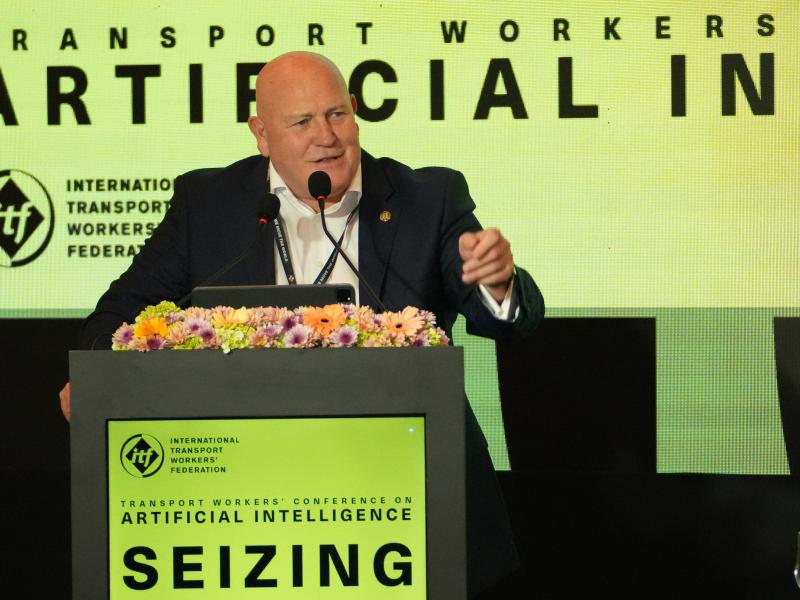
“South Korea has ratified International Labour Organization (ILO) conventions protecting workers' and trade union rights,” said ITF General Secretary Stephen Cotton. “But it is now invoking a draconian provision that allows it to issue ‘return-to-work’ orders in road transport in cases of emergency for the first time. This is clearly an attempt to break a legal and legitimate strike.”
“The use of ‘so-called’ emergency laws to force workers to return to work while they are exercising their fundamental right to strike constitutes to forced labour. The South Korean Government is violating its own Constitution and international labour and human rights law, and this can’t be tolerated.”
“As the world marks the sombre International Day for the Abolition of Slavery and renews it commitment to eliminate slavery in all its forms, the global labour movement condemns the conservative Yoon Seok-yeol Government’s illegal act of forced labour against individual truck drivers,” said Cotton. The national truck drivers’ strike started at midnight on 24 November and will continue until the government lives up to its promises on Safe Rates legislation says the Korean Public Service and Transport Workers’ Union Cargo Truckers’ Solidarity Division (KPTU-TruckSol).
ITF affiliate KPTU-TruckSol called off another national strike in June after the government agreed to continue and discuss expand of coverage of Safe Rates, a law that sets standards for safe and fair rates of pay for truck drivers, and results in fewer deaths on Korea’s roads. It called this latest strike after the government backtracked on those promises.
Adoption of a permanent Safe Rates model is one important way in which the government can fulfil its obligation under ILO Convention 155 on occupational safety and health, now recognised as a fundamental right by the ILO.
Cotton said that it is shameful and regrettable that the Korean government would walk back its commitment to extend the law.
The government has primarily targeted truck drivers in the cement industry, claiming that cement shipments have decreased by more than 90 percent since the start of the strike and that delays in construction work will impact the national economy at a level that could be considered a crisis. It has dispatched 76 investigation teams to hundreds of cement companies to obtain workers' names and addresses, so it can issue individual ‘return-to-work’ orders. Hundreds of workers have received orders.
The ITF has received reports that the process of delivering ‘return-to-work’ orders violates the process set out in law. While the law requires the Ministry of Land, Infrastructure and Transport to deliver orders by post, KPTU-TruckSol members have reported that investigation teams are asking trucking company management to send deliver shoddily written orders to their drivers by text message. Government officials are using worksite investigations to put pressure on managers that are sympathetic to the strike, and create divisions among union member and non-member drivers, the union says.
The ITF has received reports that the government has also deployed military vehicles as replacement transport, created a hostile environment for trade unionists by organising a heavy police presence at strike sites, and engaged in a media war of attacks against the union and misinformation about the strike – all in contravention of its international legal obligations. On 2 December, the Fair Trade Commission attempted a raid on the KPTU-TruckSol office.
Strikers vow to continue
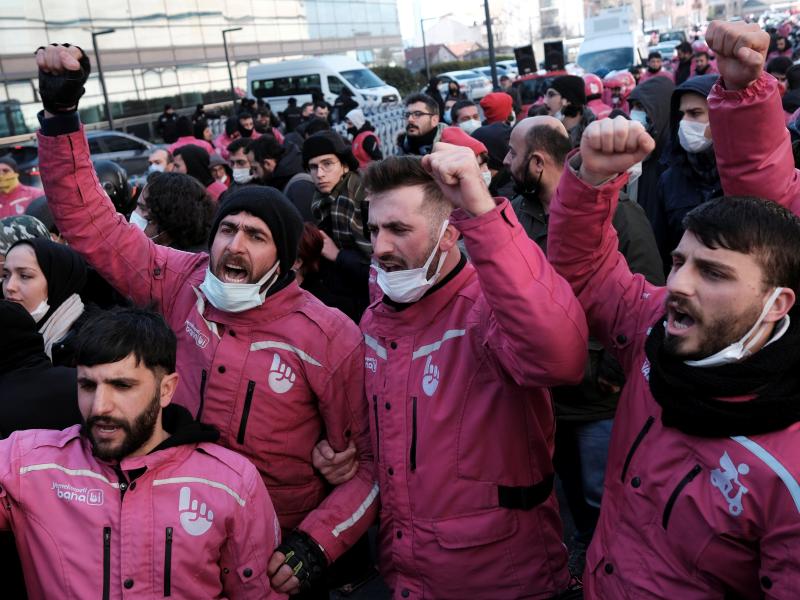
Despite facing the threat of delicensing or even prison terms, the strike’s organisers said they would defy the order and accused Yoon’s conservative government of suppressing their labour rights and breaking its promise to continue and expand the Safe Rates system.
“Despite risking a prison term of up to three years, heavy fines, and the loss of their licences, strikers have vowed to ignore these orders and keep fighting,” said Cotton. “Unions around the world are calling on President Yoon and Ministry of Transport Won Hee-ryong to abide by international conventions on forced labour and freedom of association, withdraw return-to-work orders and negotiate with drivers’ union. Attempts at strike breaking will only harden resistance, making truckers even more determined to achieve the positive changes they seek. We stand squarely and solidly behind our Korean sisters and brothers.”
For more information on what triggered the strikes read ‘Truck strike: South Korean government risks people’s lives and economic damage by reneging on safety law promise’ and 'UN & ILO must urgently intervene as South Korea weighs forcing striking drivers back to work'.