Companies and supply chain actors are responsible for preventing, identifying and addressing forced labour and human trafficking across their transport supply chains. This requires companies to conduct HRDD and exercise active duty of care across recruitment, employment and subcontracting. Audit-based or compliance-only approaches are insufficient.
HRDD processes must actively prevent conditions that enable forced labour, particularly through recruitment and employment practices that create coercion or control. This includes identifying and prohibiting recruitment fees, deception about employment conditions, confiscation or control of identity documents, withheld or delayed wages, excessive working hours, and commercial or contracting practices that create debt, economic dependency or any condition that restricts workers’ freedom or traps them in abusive situations.
As highlighted in the section in this guidance on subcontracting, companies’ and supply chain actors’ HRDD obligations extend throughout contracted and subcontracted transport services: they must ensure clear allocation of responsibilities across contracting chains, maintain transparency in subcontracting relationships, and align commercial decisions with safe and decent employment practices.
Effective prevention requires ongoing engagement with workers and their trade union representatives to identify risks, monitor standards and ensure protections are applied consistently across the supply chain. Working with the ITF and our affiliated trade unions enables companies to access worker-led monitoring, trusted reporting channels and established industrial relations mechanisms that help detect, prevent and eliminate forced labour and human trafficking risks in practice.
Where indicators of forced labour or human trafficking are identified, companies must act immediately to investigate, protect affected workers and implement effective remediation. Failure to act exposes companies and supply chain actors to severe legal, operational and reputational consequences.
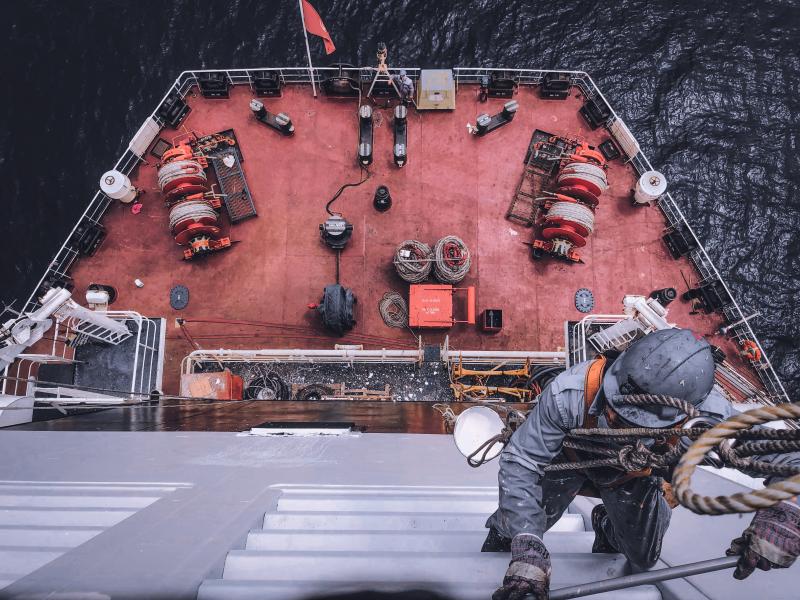
Maritime Shipping