Last year, union ship inspectors recovered more than USD $37 million in unpaid wages owed to seafarers, the International Transport Workers’ Federation (ITF) has revealed in figures published today.
The ITF’s 125 inspectors and coordinators completed 7,265 inspections in 2021 to support thousands of seafarers with wage claims and repatriation cases, despite Covid-19 restrictions preventing inspectors’ ability to board ships for much of the year.
ITF Inspectors get their name because they board and ‘inspect’ ships. They educate seafarers about their rights and support crew to enforce these rights. The officials cover more than 100 ports across 50 countries.
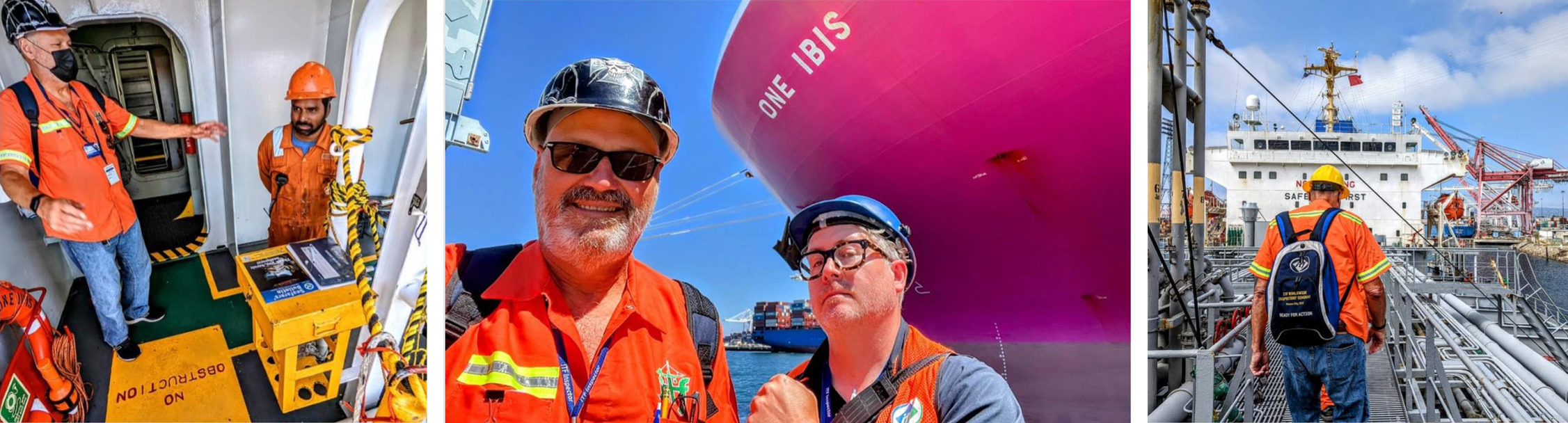 Los Angeles-based ITF Inspector Stefan Mueller-Dombois boards a vessel and speaks with crew. On this visit, Stefan is joined by new recruit Ryan Brazeau. Covid restrictions in ports and harbours made it impossible for many inspectors to board ships for much of last year. | (Credit: Ryan Brazeau)
Inspectors are trained to look for exploitation, overwork – even for signs of forced labour and modern slavery. On many vessels, Inspectors have the right to examine wage accounts, employment contracts, and to review recorded hours of work and rest.
“It’s not uncommon for crew to be paid the at the wrong rate by a shipowner, or less than the rate set out in the employment agreement covering the ship,” said Steve Trowsdale, the ITF’s Inspectorate Coordinator.
“Crew can generally work out when they’re being underpaid. And that’s when they contact us. ITF inspectors help seafarers recover what’s owed to them.”
Altogether, the ITF clawed back USD $37,591,331 in unpaid wages and entitlements from shipowners in 2021.
Trowsdale said the makeup of seafarers’ wage claims was changing: “Concerningly, we’re seeing a rise in the number of seafarers reporting non-payment of wages for periods of two months or longer, which actually meets the ILO’s definition of abandonment.”
“Seafarers might think it’s normal to go unpaid for a couple of months, waiting for a shipowner to sort out financing, but they need to be aware that non-payment can also be a sign that a shipowner is about to cut them loose and leave them abandoned.”
 An ITF inspector watches carefully as a ship's master counts out wages owed but yet unpaid to crew. Most seafarers working internationally are paid in US dollars. | (Credit: ITF)
The ITF reported 85 cases of abandonment to the International Labour Organization (ILO) last year, an historic high. In many of those cases, abandoned crew had already been waiting on several weeks’ or months’ of unpaid wages – including those aboard the storm-hit MV Lidia.
ITF inspector based in Hong Kong, Jason Lam, helped eight Burmese seafarers who were crewing the MV Lidia recover almost USD $30,000 in unpaid wages after they ran aground in October 2021, thanks to a typhoon that left them close to shipwrecked. The shipowner refused to pay the two months’ wages he owed them, abandoning them and ruling out any assistance to get them home.
Weeks of campaigning by Lam on behalf of the seafarers had an impact, and on 2 November 2021, the crew flew home – full wages in hand.
 Burmese seafarers who were left near shipwrecked after a typhoon are pictured on their way home from Hong Kong, after ITF Inspector Jason Lam helped them recover almost $30,000 USD in unpaid wages. | (Credit: ITF)
 Amidst crew change crisis, ITF inspectors got thousands of seafarers home
Trowsdale said Inspectors did not let Covid-19 barriers stop them from supporting seafarers in need, instead adapting and finding new ways of working.
“I’m extremely proud of the work of our inspectors have done to support seafarers in the last year, often working in the face of incredibly difficult circumstances,” he said. “It’s always been incredibly important for our team to be able to physically get to seafarers – to board ships and educate crew on their rights. So, when Covid-19 restrictions presented a challenge to inspectors to board vessels, there was a real question: ‘What will happen to the seafarers who need us?’”
As the crew change crisis worsened in early 2021, a flood of requests filled the ITF’s inboxes from crew desperate to sign off and get home. Covid-related border restrictions were the underlying reason for the crew change crisis, which impacted an estimated 400,000 seafarers at the worst point of the crisis. But on some ships, other more sinister factors were at play in keeping crew from their families.
“There is evidence that some shipowners were using Covid-19 as an excuse to keep seafarers working beyond their initial contracts and in complete violation of those seafarers’ human and labour rights,” said Trowsdale. “Thankfully, our team was wise to what was going on and despite everything we got thousands of seafarers home.”
“Keeping crew onboard while pretending their hands were tied may have saved those employers a few dollars in flight fares, but in today’s society that kind of conduct gets noticed. There are no shadows to hide in anymore when it comes to global supply chain accountability,” he said.
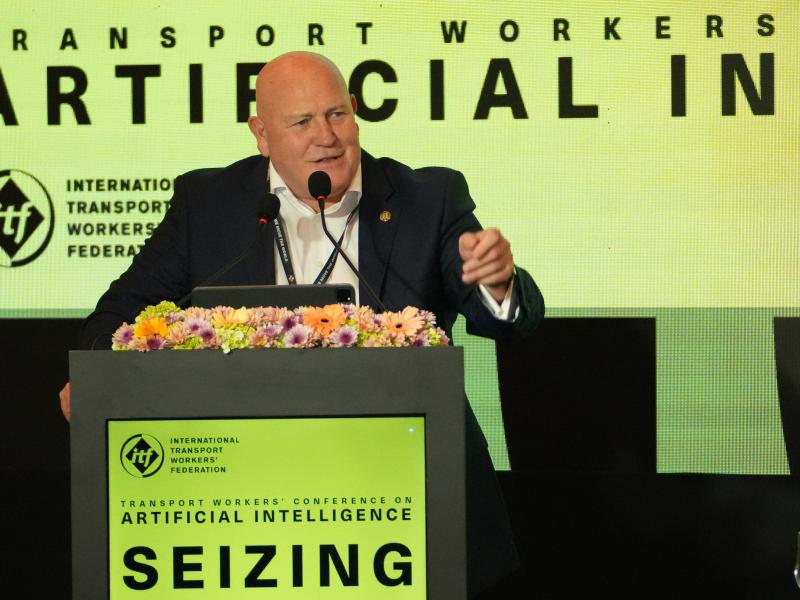
 ITF Inspectorate Coordinator Steve Trowsdale | (Credit: ITF)
END
Notes to Editors:
- Inspection stats:
- Total: 7,265 in 2021
- Requests from crew or individual seafarers: 1,861 in 2021 (25.6% of total)
- Routine inspections: 2,870 in 2021 (39.5% of total)
- Breach of contract was the number one failure of ship owners spotted in 2021 — 1,795 cases out of 7,265 inspections. This term includes illegitimate extensions to work periods, unacceptable or unsafe work conditions, and failure to abide by agreed rates of pay.
- Seafarers’ rights can be found in a range of sources. All seafarers have rights under the International Labour Organization’s Maritime Labour Convention – sometimes called ‘The Seafarers’ Bill of Rights’. But crew will also likely have rights applicable to them under various national laws, flag State regulations and collective bargaining agreements.
- In 2021, the ITF appointed inspectors in Australia, Croatia, Finland, Ireland, Norway, the Philippines, and Spain.
- If you are a seafarer needing support, or you need further clarity on your rights onboard, please contact: seafsupport@itf.org.uk
CASE STUDY DETAILS: MV LIDIA
| Vessel Name | MV LIDIA (IMO: 8615760) | Crew (nationality): | 8 seafarers (Myanmar) |
| Vessel Type | General cargo ship | Wages recovered by ITF (total): | Two months’ wages (USD $29,914) |
| Flag Register | Palau (prior to abandonment) |
About the ITF: The International Transport Workers’ Federation (ITF) is a democratic, affiliate-led federation of transport workers’ unions recognised as the world’s leading transport authority. We fight passionately to improve working lives; connecting trade unions and workers’ networks from 147 countries to secure rights, equality and justice for their members. We are the voice of the almost-20 million women and men who move the world.
Media contact: media@itf.org.uk