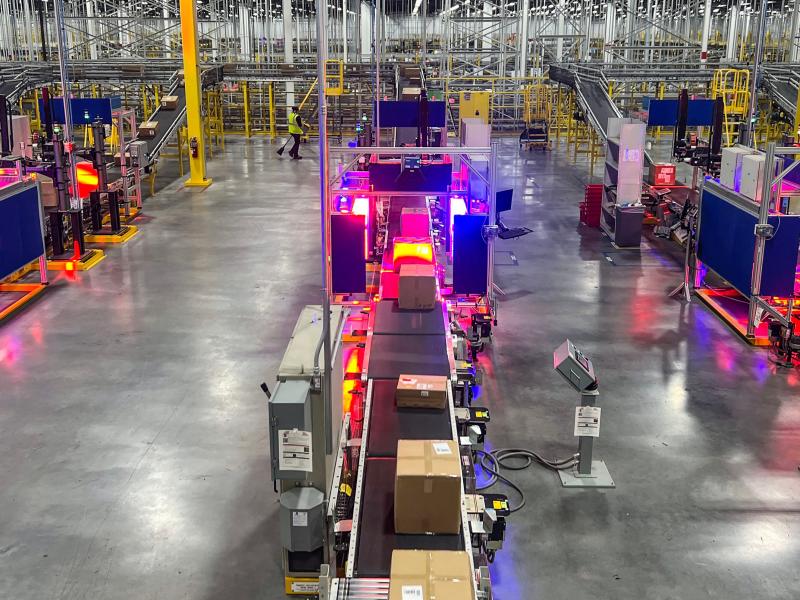
The forward-looking assessment, produced by WMU, investigates how the global transport industry will change as a result of automation and advanced technologies, forecasting and analyzing trends and developments in the major transport sectors - seaborne, road, rail and aviation - to 2040 with an emphasis on the implications for jobs and employment for transport workers.
This first-ever, independent and comprehensive assessment of how automation will affect the future of work in the transport industry focuses on technological changes that the industry is undertaking to efficiently interconnect the world through international trade. Trends in road, air, rail and maritime transport are presented. The report concludes that the introduction of automation in global transport will be “evolutionary, rather than revolutionary,” and that “despite high levels of automation, qualified human resources with the right skill sets will still be needed in the foreseeable future.”
Key findings indicate that technological advances are inevitable, but will be gradual and vary by region. Workers will be affected in different ways based on their skill levels and the varying degrees of preparedness of different countries. Case studies, as well as comparisons of autonomy scales and automation potential for job profiles in transport provide insight to the future of work. Regarding maritime transport, the report looks at 17 countries more specifically to assess how prepared they are for technical innovation.
The report notes that new technologies and automation are impacting transport sector workers through both the displacement and creation of jobs, and may result in difficult transitions for many employed in the transportation sector. The future of work needs to ensure that workers are suitably qualified and re-trained to effectively master new technologies and higher levels of automation.
IMO Secretary-General, Mr. Kitack Lim, opened the launch event noting that integrating new and advancing technologies in the regulatory framework for the shipping industry is a key strategic direction for IMO. “Member States and the industry need to anticipate the impact these changes may have and how they will be addressed,” he stated.
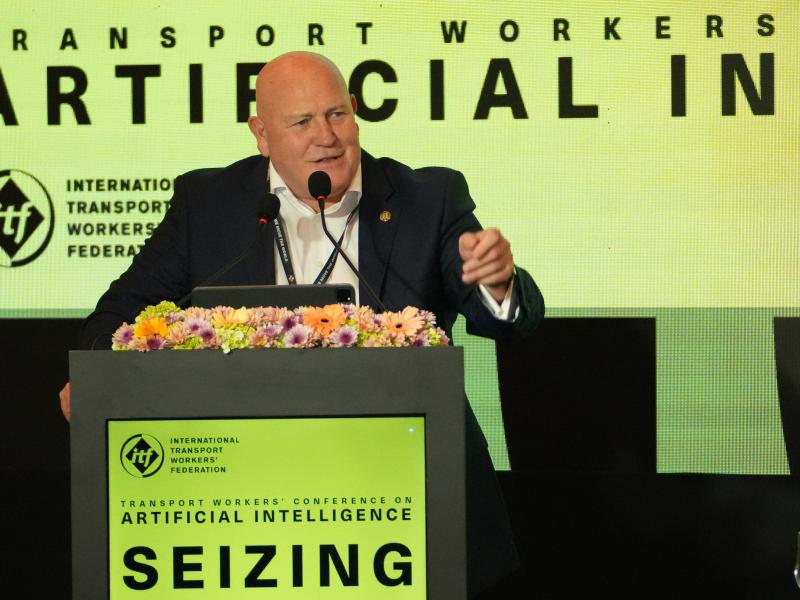
Introducing the report, ITF General Secretary, Mr. Stephen Cotton, emphasized that automation, new technology and the future of work are some of the most important challenges facing workers today. He stated, “Transport workers of today and tomorrow must be equipped with the required knowledge, skills and expertise for the jobs of tomorrow. The study provides the information needed to support these aims. The ITF remains committed to working in partnership to ensure our unions and members are central to developments in building the future of work.”
The importance of the study was echoed by Dr. Cleopatra Doumbia-Henry, President of WMU, who stated, “There are four takeaways from the launch of this major report today: First, the academic freedom that the University had to undertake this independent report, and which was respected by the ITF. Second, the research undertaken has enabled us to design and develop a repository on the status of technology globally, in all modes of transport. Third, it enabled us to provide a more accurate assessment of technology, the modes of transport, and their status in the short, medium and long term. And finally, the report represents research on transport modes that is 60 per cent focused on road, rail and aviation, and 40 per cent on maritime.”
Dr. Doumbia-Henry concluded, “The transportation sector is vital to national economies and the global economy as a whole. We hope this report will help prepare the transportation industry to continue to contribute to the wellbeing of societies and communities worldwide and provide decent work for all.”
To access the full “Transport 2040: Automation Technology Employment - the Future of Work” Report.
Notes for editors
About ITF
The International Transport Workers' Federation (ITF) is a democratic global union federation of 670 transport workers trade unions representing over 20 million workers in 140 countries. The ITF works to improve the lives of transport workers globally, encouraging and organising international solidarity among its network of affiliates. The ITF represents the interests of transport workers' unions in bodies that take decisions affecting jobs, employment conditions or safety in the transport industry, such as the International Labour Organisation (ILO), the International Maritime Organization (IMO) and the International Civil Aviation Organization (ICAO).
About WMU
The World Maritime University (WMU) in Malmö, Sweden is a postgraduate maritime university founded in 1983 by the International Maritime Organization (IMO), a specialized agency of the United Nations. The mission of WMU is to be the world centre of excellence in postgraduate maritime and oceans education, professional training and research, while building global capacity and promoting sustainable development. WMU is an organization by and for the international maritime community and is committed to the United Nations Sustainable Development Goals Agenda.