As we saw when the recent tech outage hit the aviation industry, workers step in when technology fails. Behind the scenes we know this is a regular occurrence, even as fewer workers are employed because of a supposed reduced need for them. The outage shows that technology's short-term gains come at a cost when deployed at speed in a bid to address operational challenges. Without sufficient assessment of how tech is being deployed, the industry’s over-reliance on it means incidents such as these are likely to become more commonplace costing millions, affecting everyday lives and disrupting passenger flights.
The International Transport Workers’ Federation (ITF) believes that technology can be a solution to build a safer, more efficient and resilient aviation industry. But that won't happen if the workers who do the work and have the expertise are left out of decision-making.
The incident involving Microsoft and CrowdStrike's cloud services resulted in a global meltdown of aviation operations. Flights were grounded and airports crippled causing widespread disruption which stranded passengers. Workers stepped in to breach the gaps where they could, including hand writing boarding passes to enable passengers to fly. The incident underscored the vulnerability of the aviation industry to technological failures and highlighted the critical need for robust, worker-inclusive decision-making processes in the development and deployment of technology.
Technology at airports and their impact on workers
Our recent report, ‘Technological Changes at Airports and Their Impact on Workers’, explores how new technologies, intended to increase efficiency and reduce costs, are transforming the aviation industry. Airports worldwide are rapidly adopting automation, artificial intelligence, and digital tools to streamline operations. However, these advancements often come at the expense of workers' rights and job quality, and when these systems fail, they can lead to significant delays and disruption, as recently witnessed.
Key findings from our report reveal that while technology can potentially ease workloads and improve safety, it is frequently introduced without adequate consideration of its negative impacts. Workers in security operations, passenger handling, and baggage handling are particularly affected - facing intensified workloads, increased aggression from passengers, and heightened surveillance.
The Microsoft/CrowdStrike outage is a powerful reminder that technological advancements in the aviation industry must be managed with caution and foresight. The chaos it caused exemplifies the risks of excluding workers from technological decision-making. When workers are not involved, critical perspectives on operational resilience and risk management are overlooked. Our report emphasises that meaningful engagement with workers and trade unions is essential. This includes conducting labour impact assessments and ensuring job security, quality, and skills development.
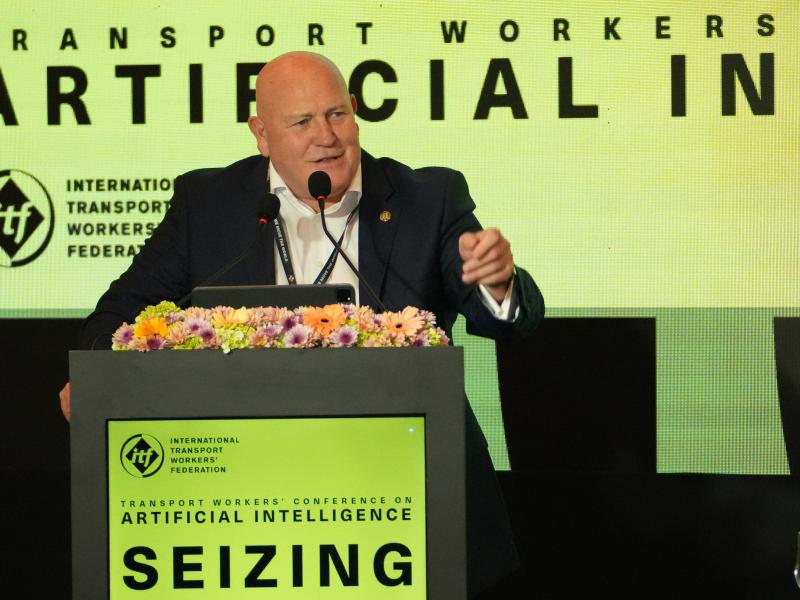
ITF Civil Aviation Section Chair, Edgardo Llano, said: "It is workers that keep the world moving, and workers that keep aviation moving. It is workers that keep passengers safe and get them to their destinations. Technology can play a part in assisting with that, but it is not a panacea – it cannot be imposed in a bid to fix all the problems that unions can see are wrong within the industry. "
Principles for introducing new technology
To mitigate the adverse effects of technological change, our report outlines several principles:
- Collaborative approach: Involving all key stakeholders, particularly trade unions, in the decision-making process.
- Labour impact assessments: Evaluating the potential effects of new technologies on jobs and workers' rights before implementation.
- Commitments to job security: Ensuring that technology does not lead to job losses or deterioration in job quality.
- Training and skills development: Providing adequate training for workers to adapt to new technologies.
- Controls on monitoring: Regulating the use of surveillance technologies to protect workers' and passengers’ privacy.
At the ITF, we advocate for collective bargaining, and effective regulation to create a future where new technology drives progress to enhance workers' jobs, increase their quality of life and enable better decision making to help tackle critical societal issues like decarbonisation.
Together, we can ensure that the future of work is fair, inclusive, and resilient.