The OECD plays a prominent role globally in standard-setting and providing guidance on responsible business conduct, through its guidelines for multinational enterprises (MNEs) and due diligence guidance.
The OECD MNEs guidelines set out the standard of business behaviour expected of companies by adhering governments. Almost all of the global union federations have supported the filing of complaints by national affiliates through the OECD process with varying outcomes. However, the guidelines have proved to be a useful tool for unions when social dialogue has failed.
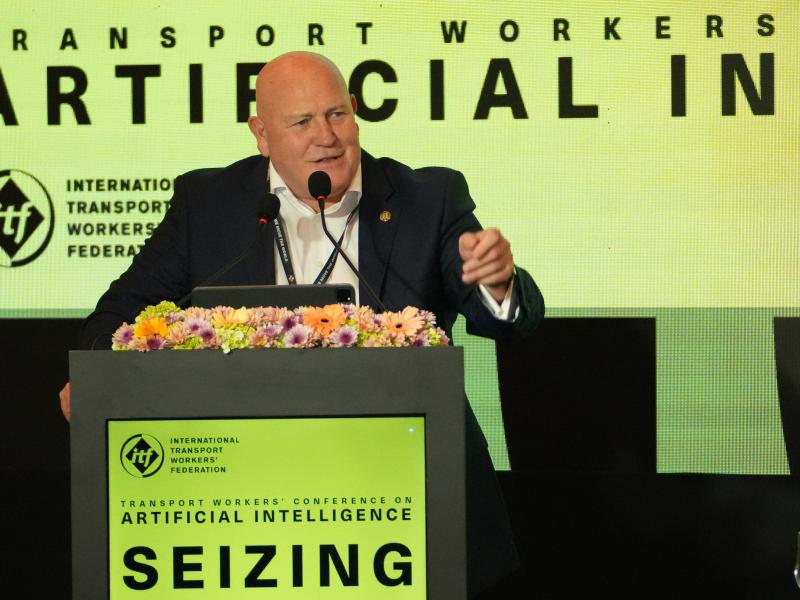
During his contribution to the roundtable, ITF assistant general secretary Rob Johnston said: “We welcome the work that the OECD has done to date, but we need to do more. We need to strengthen the social contract of private corporations, and the OECD has a vitally important role in achieving this.”
Recent due diligence guidance produced by the OECD recognises the key role that social dialogue plays at all stages and levels. The ITF agrees with this, but the reality in many supply chains is very different with trade union concerns often ignored or dismissed. When this occurs, the OECD national contact person can play an important role in bringing together both parties to find solutions.
The ITF’s experience has shown that effective global collective agreements can in fact be very effective forms of due diligence. Due diligence can also open the door to stronger social dialogue and the ITF is currently exploring with a major MNE how to do this across a major supply chain.
The ITF’s version of proper due diligence in transportation includes the full integration of trade unions. The ITF’s model for supply chain due diligence is based on three components:
- Minimum standards and principles reflected in tendering policies.
- Monitoring and compliance overseen by workers through trade unions.
- Remediation that works to reform non-compliance through a series of measures that are elevated appropriately, thus protecting employment and welfare.
Integrating the ITF approach into the OECD future work program can only strengthen the work around human rights due diligence through meaningful engagement by workers and unions, and further contribute to social dialogue at the global level.