Delegates adopt eight motions and two statements, covering conflict-zone safety, the Paraguay-Paraná Waterway, the Amazon, river cruising and a new general framework agreement for tug and inland navigation workers.
The ITF Inland Navigation Section Conference closed in Panama City today. Over two days, affiliates from across the world agreed a programme of work to protect, organise and represent the workers who keep the world's rivers, ports and inland waterways moving.
The conference adopted two statements and eight motions. They set the section's priorities until the next ITF Congress.
"We came to Panama as unions from many countries and many waterways. We leave with clear priorities," said Jacques Kerkhof, Chair of the ITF Inland Navigation Section. "From the Rhine to the Paraná, from the Amazon to the Persian Gulf, inland navigation workers keep the world moving, and this section will make sure their rights move with them."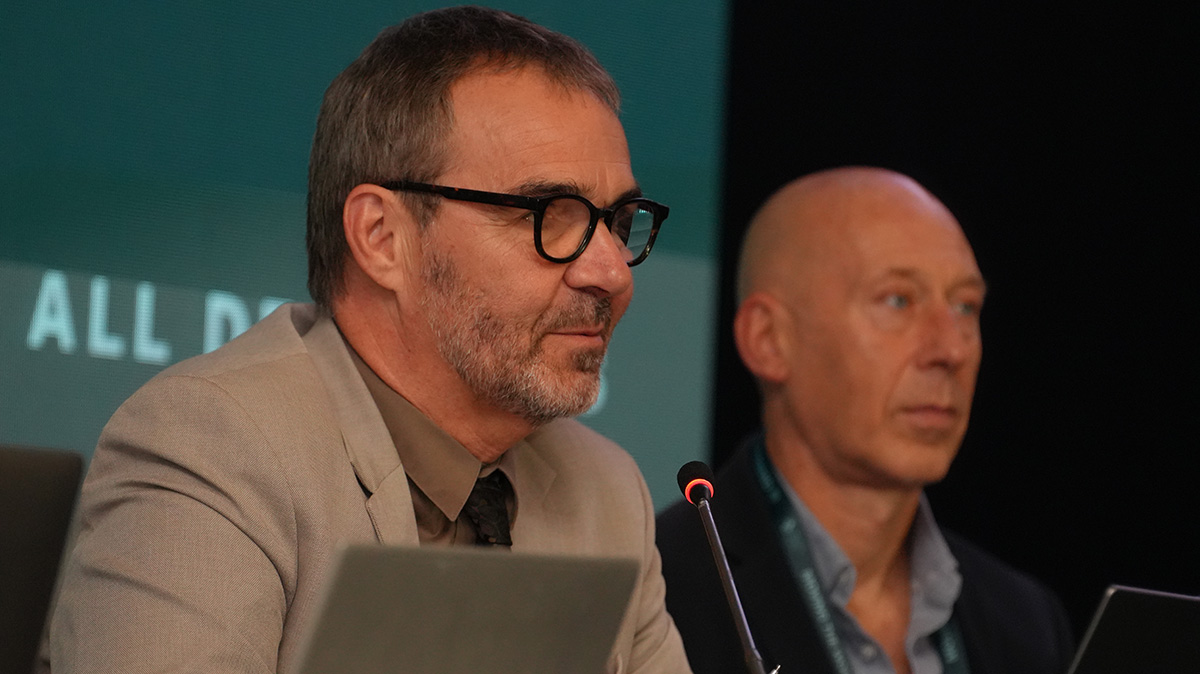
A global framework for tug and towage workers
The conference endorsed a General Framework Agreement (GFA) for tugs and towage. It gives unions a common platform for dealing with the multinational companies that dominate the sector, such as Boluda, Svitzer, SAAM and MedTug.
Tug and towage workers face growing pressure on pay and conditions, and rising concern over safety and ageing fleets. The GFA sets out the fundamental rights all workers are entitled to under ILO conventions. It also aims to make sure the same minimum standards apply in every country where a company operates. Rather than replacing national agreements, it creates a framework for union–management relations that supports collective bargaining.
"A handful of global companies now run tug fleets in ports on every continent, and they too often treat workers' rights as something that changes at each border," said Jason Woods, Chair of the ITF’s Global Tug Network.
"This framework says the opposite. Wherever a company operates, its crews are entitled to the same fundamental rights, the same safety standards and the same respect for their unions. This is about lifting the floor, so that workers in every region start from decent standards and unions everywhere can push them higher."
The agreement was drafted by a working group of affiliates from Belgium, Canada, Panama, Argentina, Australia and Great Britain, with input from affiliates worldwide.
Tugboat crews in the line of fire
The conference drew urgent attention to the dangers faced by tugboat crews and inland navigation workers in live conflict zones, including the Strait of Hormuz and the Persian Gulf, the Black Sea and the Sea of Azov.
The conference condemned all attacks on tugboats, inland navigation vessels, port craft and civilian shipping, demanding that governments, port authorities and employers provide reliable security information, safe shelter, and prompt evacuation and repatriation for maritime workers.
"Tugboat crews are the first ones called when a ship is burning, and too often the last ones anyone thinks to protect," said Kerkhof. "These workers have no armour and no defences, yet they are being sent into active war zones to save lives and vessels. Governments and employers must make sure they get the same protection, information and evacuation guarantees as every other worker at sea."
A voice for workers on the Paraguay-Paraná Waterway
Two motions focused on the Paraguay-Paraná Waterway, a strategic transport artery for Argentina, Bolivia, Brazil, Paraguay and Uruguay.
- Motion 1 from Brazil, commits the ITF to set up a five-country union coordination mechanism for the waterway. It also asks the ITF to map routes for union participation in the Intergovernmental Committee of the Waterway (CIH) and to build a joint advocacy strategy for structured worker consultation.
- Motion 8 from Paraguay's ASOCAPRACT, asks the ITF to give technical support to unions negotiating a new collective agreement and updating outdated labour law in Paraguay's inland waterway sector. It also asks the ITF to seek institutional participation in CIH meetings, either as an observer or on behalf of workers.
"For decades, the rules governing the Paraguay-Paraná Waterway have been written by governments and companies alone. The workers who actually crew these vessels have been left outside the room," said Edgar Díaz, ITF Regional Secretary for Latin America and the Caribbean. "These motions seek to change that. Unions from all five countries will now work together, with the full backing of the ITF, to win a seat at the table where decisions about our members' safety and jobs are made."
Organising and protecting workers in the Amazon
Motion 4 from CONTTMAF in Brazil, commits the ITF to develop an Amazon Inland Navigation Worker Protection and Organising Plan for 2027–2029. The plan will include a regional mapping of the workforce and its routes, and a network of unions working on safety and violence prevention. It also requires just transition assessments for Amazon transport and climate policy.
The motion responds to piracy, cargo theft and organised crime on remote routes. It also addresses widespread informal employment and the growing impact of droughts and floods on navigation.
"In the Amazon, inland navigation is often the only link a community has to the outside world, and the crews who run them face piracy, isolation and climate extremes with almost no protection," said Díaz. "This plan will put union organisation and worker safety at the centre of how the region develops."
Skills, standards and equality
Delegates adopted three further motions focused on the workforce:
- Motion 2 calls for a regional study of training needs and certification systems in inland navigation, and for minimum training principles.
- Motion 3 commits the ITF to hold regional seminars on women's participation, leadership and safety in inland navigation. The seminars will lead to an action plan to tackle discrimination, harassment and inadequate facilities for women.
- Motion 7 from Centro de Maquinistas Navales de Paraguay (Paraguayan Marine Engineers Center) defends the marine engineer profession, rejecting any automatic recognition of general engineering degrees as a substitute for maritime training, seagoing experience and professional certification.
Toward a global labour standard for inland navigation
In one of the conference's most far-reaching decisions, Motion 6, from CONTTMAF and Paraguay's Centro de Maquinistas Navales, launches work toward an international labour instrument for inland navigation workers.
The Maritime Labour Convention does not cover vessels that operate only on inland waters, which leaves major gaps in protection. The ITF will carry out a gap analysis with ILO legal specialists, consult affiliates and prepare an advocacy roadmap before the next ITF Congress, covering the possible scope of a convention, recommendation, code of practice or guidelines.
"Seafarers won the Maritime Labour Convention," said Kerkhof. "Inland navigation workers deserve the same. Today we have started the work that can give them that."
Organising Europe's river cruise sector
Motion 5, from ver.di in Germany, reaffirms a joint ITF/ETF organising campaign in the European river cruise sector, starting with the Rhine and Danube corridors.
The campaign aims to significantly raise union membership and collective bargaining coverage. ITF inspectors will be deployed near major cruise hubs. In the longer term, the ITF will explore an industry-wide campaign modelled on its Flags of Convenience campaign, setting minimum standards for all workers regardless of nationality.
Solidarity with Richard Crease and Unite
The conference also gave its full support to Richard Crease and Unite the Union. Svitzer has confirmed it is making Unite's National Convener role redundant, which in practice eliminates the union's role within the company.
Delegates backed all of Unite's demands to reinstate the National Convener role, recognise regional union representatives, guarantee fair terms and conditions for all workers and end the two-tier workforce at Svitzer.
Unite has notified Svitzer that it is in dispute, and an industrial action ballot is imminent. The conference was clear that responsibility for any disruption at UK ports and terminals lies with Svitzer alone.
"Svitzer says this is about a role, not a person. We all know it is about the union," said Kerkhof. "Removing workers' elected representation does not count as an organisational change. It is an attack on collective bargaining. Our whole section stands with Unite the Union until this is put right."