The ITF and JNG met in Indonesia between 4-5 June 2014 to conclude negotiations for the creation of the new IBF Framework Agreement. The round of negotiations initially commenced in October 2013, when both parties met in St. Petersburg, to exchange their list of demands for the negotiation.
The negotiations were particularly challenging this year, following the depression of the global shipping market, since the last agreement was negotiated in 2011. Both parties acknowledged the need to support the growth of the market, but also acknowledged the need to maintain sustainable and fair employment for the seafarers sailing on JNG vessels worldwide.
The talks concluded today with a mutually agreed Framework Agreement, for the following 3 years. The main points of the agreement were:
• A salary increase of 1% in 2015, 2% in 2016 and 3.5% in 2017
• A 10% rebate for JNG members from the ITF Welfare Fund, with an additional 2 ½ % based on an incentive system.
• Downgrading of the Internationally Recognised Transit Corridor to an IBF Extended Risk Zone status, whilst maintaining all other risk areas previously agreed.
• Changes to various contractual clauses.
• Enhanced welfare support for seafarers
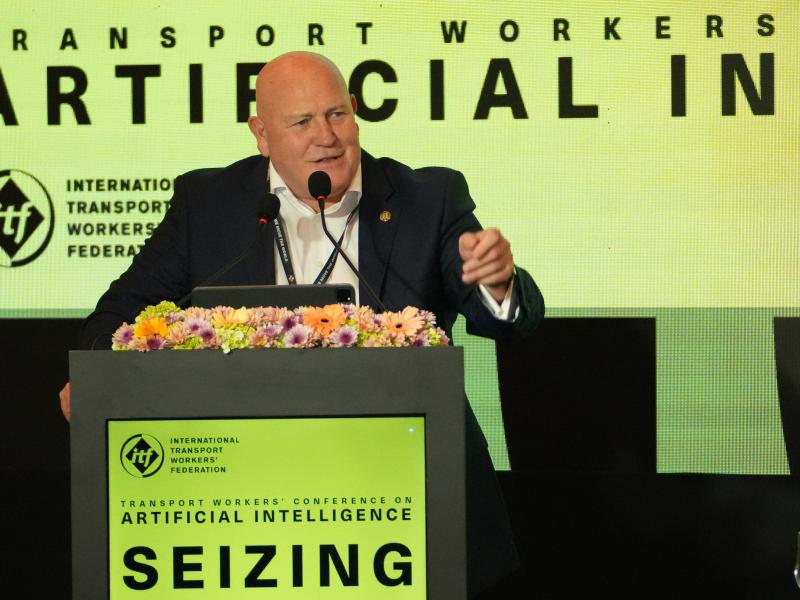
Commenting on the two days of intense negotiations Dave Heindel, Chair of the ITF Seafarers' Section, who chaired the talks said: 'Considerable progress has clearly been made from both parties over this round. The ITF has understood the challenges facing the JNG members in their ability to afford a pay increase, but it has been important to secure a pay increase for our members, to ensure a fair wage and conditions of employment. There have at times been differing views by both parties, but both have been able to put aside these differences to conclude the negotiations.'
Speaking at the IBF meeting in Indonesia, the JNG Chairman Mr. Tsutomu Iizuka said: ‘The last 8 months of IBF discussions have been tough. Both sides commenced the progress at different ends of the spectrum, wishing to best represent their respective members. There has been considerable movement from each side, which has been difficult at times and has only been possible due to the mutual respect between the parties to the IBF, gained over the past 10 years.’
Paddy Crumlin, President of the ITF added: ‘The negotiations were understandably difficult given the market conditions, but notwithstanding that the successful conclusion is a reflection of the maturity of social dialogue and engagement within this aspect of the shipping industry. In a truly international industry employing seafarers from virtually every nation, reaching a single standard of employment that is enforceable and supported by the social partners is an extraordinary achievement.
Speaking on the outcome of the new IBF Framework Agreement, the JNG Spokesperson, Giles Heimann said: ‘The past few years have been particularly challenging for shipowners. Although we have seen signs of market recovery, many owners are still facing challenging times. The JNG has worked hard to get a mutually acceptable outcome, which will aid owners to financially recover, but at the same time, will recognize the welfare of the seafarers that they employ’.
ENDS
Notes to editors
The IBF was formed in 2003 as a mechanism for collective bargaining between maritime employers and maritime unions over the wages and conditions of employment for seafarers serving on foreign flag ships covered by ITF Special Agreements. Maritime employers are represented by the International Maritime Employers’ Council (IMEC), the International Shipping Employers' Group (ISEG) which incorporates the International Maritime Managers’ Association of Japan (IMMAJ) and the Taiwanese company Evergreen, and the Korean Shipowners' Association.
Together they form the Joint Negotiating Group (JNG) which allows maritime employers to present to the ITF a coordinated view of employers from across the world.
The International Transport Workers' Federation (ITF) represents 684 unions in 140 countries including maritime affiliates throughout the world representing in excess of 600,000 seafarers.
The IBF negotiations include both central negotiations and local negotiations which allow for development of core principles which can then be incorporated into specific local arrangements. This unique approach to pay negotiations is the only example of international collective bargaining.
For more details please contact Sam Dawson (ITF).
Tel: +44 (0) 20 7940 9260.
Email: Dawson_sam@itf.org.uk
Giles Heimann (IMEC). Tel: Giles.Heimann@imec.org.uk