Responsible businesses aligning to HREDD can now access transport stakeholder engagement from ITF’s global network of workers and unions.
Supply Chain Guidance on the human and labour rights risks faced by transport workers in supply chains will fundamentally shift responsible businesses’ ability to undertake human rights and environmental due diligence (HREDD) – protecting transport workers from human rights risks, and limiting the exposure of companies to financial loss, and legal and reputational harm.
Launched today by the International Transport Workers’ Federation (ITF) at the United Nations (UN) Forum on Business and Human Rights, in Geneva, the Guidance offers an expansive insight into often opaque transport supply chains.
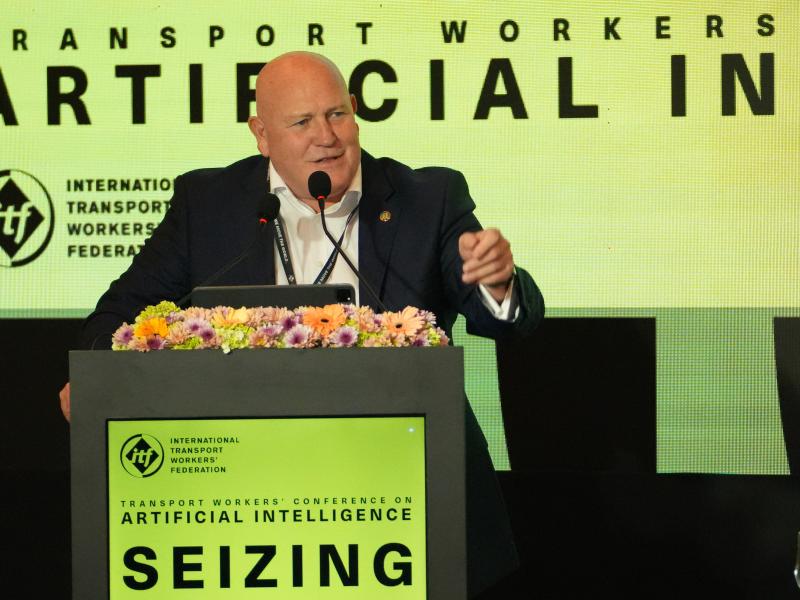
ITF General Secretary Stephen Cotton said: “The ITF is at the forefront of building pioneering approaches to HREDD for transport workers – and this new Guidance brings together years of work and global expertise into an accessible summary of what companies need to do in order to conduct meaningful HREDD.
“With the ITF’s global network of affiliate unions and transport workers, companies can now get in touch with us and know that they will get real, worker-driven analysis of the realities of what’s happening in their supply chains.”
The launch of the Guidance comes as European Union (EU) Member States prepare domestic laws to meet the EU Corporate Sustainability Due Diligence Directive (CSDDD), and only weeks after the UK Government confirmed it will also legislate for mandatory human rights due diligence.
“As new HREDD laws come on the books around the world, this has never been more important,” Cotton added. “And it’s precisely through partnerships between responsible businesses and trade unions that companies can be confident that they are in compliance with laws and principles. Together, we can bridge the legislative gaps that still exist on protecting transport workers’ rights.”
The ITF has already struck groundbreaking HREDD agreements with leading apparel companies, ASOS, New Look and TFG London.
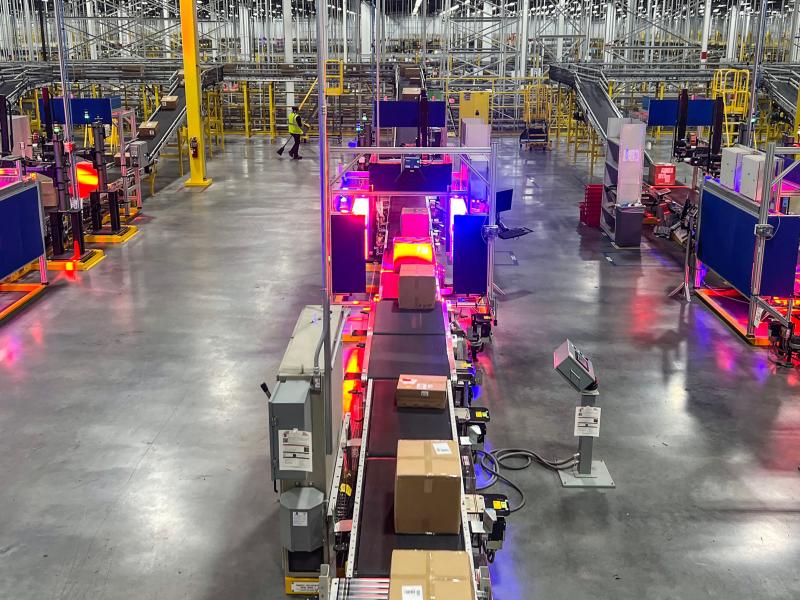
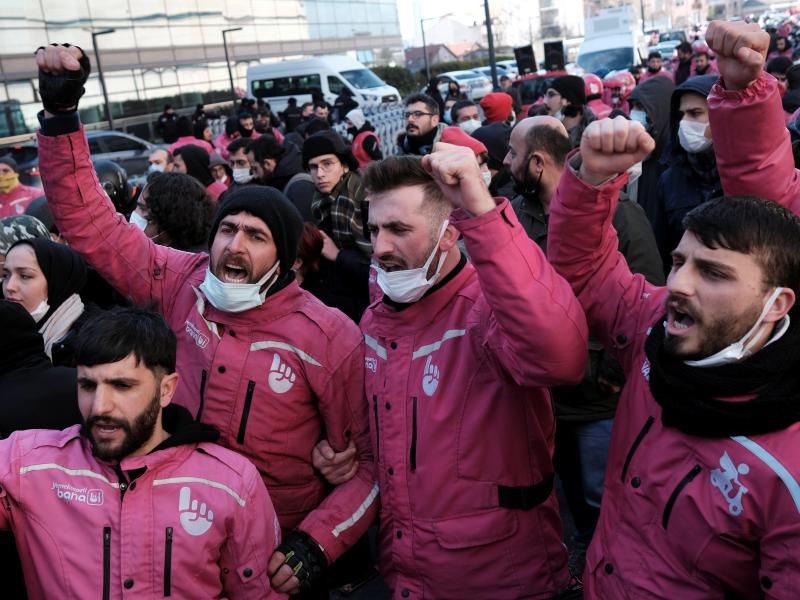
The new Guidance specifically focuses on maritime shipping, road transport, warehousing and logistics, and fisheries, with more ITF industrial sections to be added in 2027. It covers human and labour rights risks found across the transport sector – from forced labour and human trafficking, to violence and harassment, and fatigue – and how they may present in different transport sectors.
“Without worker engagement, HREDD simply can’t be effective – and that means transport workers facing the risk of human rights abuses and companies facing losses,” said ITF Legal Director Ruwan Subasinghe.
“When companies choose to work with the ITF, together, we can improve working conditions and build the resilience of supply chains. The ITF is uniquely positioned to help companies access the reality of the everyday risks that transport workers face and, through that, ensure that no potential harms are hidden and that HREDD succeeds in its mission.”
The Supply Chain Guidance maps risks across transport, with specific guidance focused on how risks can present in maritime shipping, road transport, warehousing and logistics, and fisheries. It follows the six steps of the OECD due diligence framework, setting what effective HREDD looks like at every step.
The Guidance is specifically targeted to:
- Transport buyers – accountable for conditions in their transport supply chains
- Transport suppliers and employers – with obligations of their own and a role in their clients' due diligence
- Investors – assessing whether a company's HREDD is credible
- Regulators and governments – setting and enforcing due diligence requirements
Giles Bolton, Executive Director of the Ethical Trading Initiative, said: “Transport workers keep global supply chains moving, and they face some of the most serious labour rights risks along the way.
“At ETI, we know that human rights due diligence works best when companies, trade unions and NGOs work together, and when workers have a real voice. This Guidance gives businesses a practical way to understand where transport workers face the greatest risks and how to address them. With new due diligence laws arriving in the EU and the UK, it comes at the right time.”
ENDS
Notes to Editors
- Access the ITF Supply Chain Guidance here: https://itfglobal.org/supplychainguidance
- The ITF Guidance is grounded in internationally recognised HREDD frameworks that clearly state that effective HREDD depends on respecting freedom of association, collective bargaining and worker engagement. They include the UN Guiding Principles on Business and Human Rights (UNGPs), the ILO Tripartite Declaration concerning Multinational Enterprises and Social Policy, all ten ILO Core Conventions, the OECD Guidelines for Multinational Enterprises and the Ethical Trading Initiative’s Base Code.
- Human and labour rights risks covered by the Guidance are systemic risks; occupational safety and health risks; wages, working and living conditions; mental health and psychosocial risk; forced labour and human trafficking; discrimination; violence and harassment; access to sanitation facilities; new technology risks; and freedom of association and collective bargaining.
- Relevant corporate accountability legislation is also referenced including the European Union (EU) Corporate Sustainability Due Diligence Directive (CSDDD) which currently list eight ILO Core Conventions; and C155 and C187 on a Safe and Healthy Working Environment will be added once all EU Member States ratify them.
- Article 5 of the EU CSDDD requires Member States to ensure that companies conduct risk-based HREDD across their own operations, their subsidiaries and – “where related to their chains of activities” – those of their business partners. Due to transport’s inclusion in the “chain of activities” definition, transport or logistics partners carrying out distribution, transport or storage for or on behalf of an in-scope company fall within the HREDD process outlined in Articles 7 – 12.
- To start a conversation with the ITF supply chain team, contact: supplychain@itf.org.uk