Seafarers around the world will receive a two-year, 5% pay rise after negotiations at the International Bargaining Forum (IBF) in Singapore last month.
The pay award will be implemented through a 3.5% pay rise with effect from 1 January 2026, and a further 1.5% pay rise with effect from 1 January 2027.
The award was negotiated under the IBF, a unique global structure that generates the world’s largest Collective Bargaining Agreement (CBA). It covers more than 11,000 vessels and 400,000 seafarers, and involves nearly 500 maritime employers alongside the International Transport Workers’ Federation (ITF) and its affiliated maritime trade unions from across the world.
The IBF partners agreed to increase the death and disability benefits in the current version of the IBF Framework Agreement, in line with the 5% pay rise.
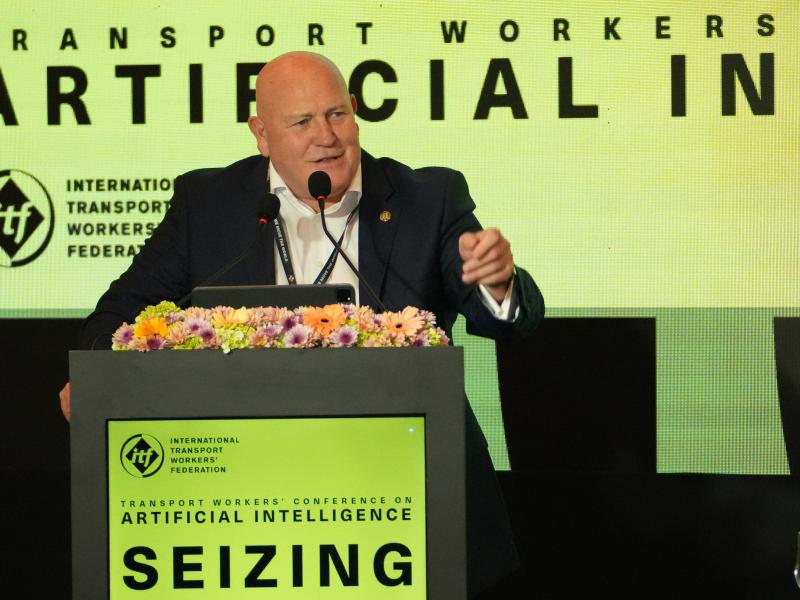
ITF President and Dockers’ Section Chair, Paddy Crumlin, said: “It’s imperative that seafarers facing increases to their cost of living don’t face real terms pay cuts – so, despite a challenging set of negotiations, we’re glad to have achieved that. We can’t forget that seafarers have faced some very tough times in recent years – from the pandemic to ongoing conflict situations hitting maritime trade routes, and now political turbulence hitting trade as a whole. Through all this, seafarers have persevered and endured, and they deserve every cent of the pay rise that’s rightly coming their way.”
ITF spokesperson and ITF Seafarers’ Section 1st Vice Chair, Conrad Oca, said: “This wasn’t an easy set of negotiations and, as ever, the outcome has involved give and take on both sides. But I’m happy to say that this is an outcome that is good and fair for seafarers, who need a pay rise that reflects the changes we’ve seen in their cost of living. Alongside this, it’s vitally important that we keep the profession as attractive as possible to seafarers and potential new recruits as we face an ongoing recruitment and retention crisis.”
Spokesperson for the Joint Negotiating Group of maritime employers (JNG) and Chairman of IMEC, Captain Belal Ahmed said: “These were tough pay talks as the industry is preparing for what is likely be a tough period given the challenges faced by globalisation and world trade. One of the core principles of IBF is to ensure we protect and foster a sustainable shipping industry, the agreement we reached puts us in good stead whilst at the same time awarding a fair pay increase to seafarers that play such a crucial role and keeps their remuneration package attractive.”
Chairman of IMMAJ, Toshihito Inoue, said: “The negotiations were tougher than we had expected as the increase in the cost of living over the past couple of years has been an acute problem for not only seafarers but also shipowners. I thought The ITF and the JNG discussed in good faith and tried to explore every avenue to reach an agreement that would be accepted by both sides. I am happy we finally clinched the deal.”
END
Media contacts:
ITF: media@itf.org.uk +44 7738 832 413
JNG: info@imec.org.uk +44 20 7702 9138
About the ITF: The International Transport Workers’ Federation (ITF) is a democratic, affiliate-led federation recognised as the world’s leading transport authority. We fight passionately to improve workers’ lives, connecting more than 730 affiliated trade unions from over 150 countries to secure rights, equality and justice for workers globally. We are the voice for more than 16.5 million transport workers across the world.
About the JNG: The Joint Negotiating Group (JNG) allows for the coordination of the views of employers from across the world in the maritime industry. The JNG today consists of the International Maritime Employers' Council (IMEC), the International Mariners Management Association of Japan (IMMAJ), the Korean Shipowners Association (KSA) and Taiwan-based company Evergreen.
About the IBF: The IBF was established in 2003 as a mechanism for collective bargaining between maritime employers and unions to agree the wages and conditions of seafarers working aboard vessels flying the flag of an open register designated as flag of convenience by the ITF. With over 11,000 vessels to be covered by the deal struck last month, the ITF-JNG IBF is the largest private sector collective pay agreement in the world.
- The IBF negotiations include both central negotiations and local negotiations which allow for development of core principles which can then be incorporated into specific local arrangements. This unique approach to pay negotiations is the only example of international collective bargaining.
- The IBF Seafarers’ Support Fund was created exclusively to support the welfare of seafarers aboard vessels covered by IBF agreements.