The International Transport Workers’ Federation (ITF) has launched the world’s first global standards for decent work in warehousing, distribution, and logistics, a major step towards raising the floor for millions of workers across global supply chains.
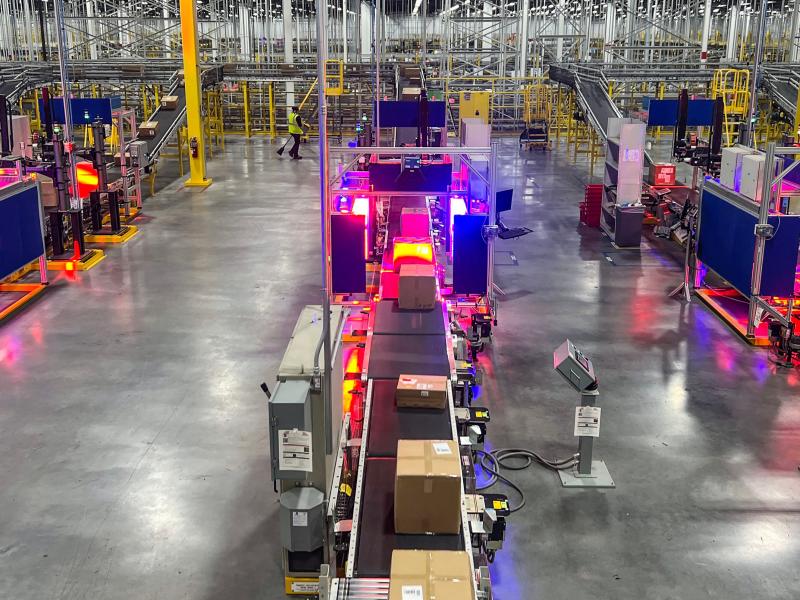
The "8 Principles for Decent Work" set out clear, enforceable benchmarks for safety, fair employment, dignity, and rights at work. These new standards are a blueprint for a sector that has grown exponentially due to e-commerce but remains plagued by low standards, unsafe conditions, short-term employment contracts, and inhumane algorithmic control.
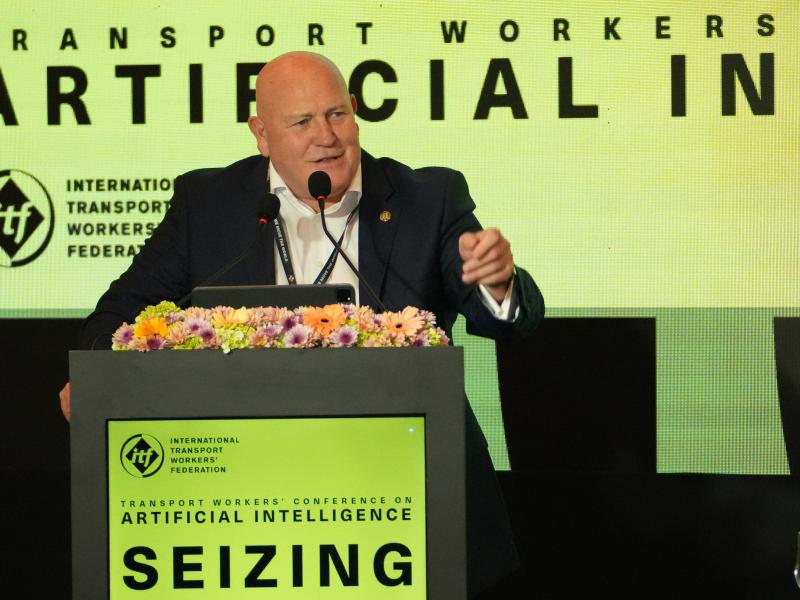
“Warehousing is no longer just storage, it’s the engine room of the global economy,” said Stephen Cotton, General Secretary of the ITF. “But the workers who keep goods moving are too often invisible and exploited. These principles are a call to action for companies, governments, and consumers to raise the bar and protect those powering the global supply chain.”
Matt Draper, ITF’s Warehousing Distribution & Logistics Chair, said: “These principles are a turning point for warehouse workers everywhere. For too long, this sector has relied on a hidden workforce facing dangerous conditions, low pay, and zero job security. The ITF’s new global standards give workers a voice, a path to decent pay, and a way to hold their employers accountable. This is about lifting standards across the board.”
Backed by major global company
Global logistics firm SeSé México – with over 1 billion Euros in annual turnover – is the first company to sign onto the new framework, committing to integrate the principles into their operations and pilot implementation in key warehousing hubs.
A spokesperson for SeSé México said, "At Sesé México, adhering to the "8 Principles for Decent Work" is not just an obligation, but a way of life at work, where the well-being of employees, and therefore of the company itself, is taken into account. Thus, we form a family with values that are evident in every activity. We are grateful for this recognition, which inspires us to continue respecting the principles that ensure decent and dignified work."
The 8 principles for decent work include:
- Fundamental principles and rights at work: Grounded in the ILO Declaration, ensuring freedom of association, non-discrimination, and a safe working environment.
- Safe jobs: Identifying and managing workplace hazards and ensuring worker participation in health and safety planning.
- Secure and decent jobs: Advocating for stable, full-time employment, living wages, social protection, and fair scheduling.
- Harassment and violence-free workplaces: Mandating strong anti-violence policies, gender-responsive redress mechanisms, and safe commuting.
- Responsible use of technology: Calling for algorithmic transparency, limits on surveillance, and collective consultation on tech deployment.
- Just Transition for climate-ready warehousing: Integrating decarbonisation with job security and resilience planning.
- Freedom of association and collective bargaining: Reaffirming the right to unionise and negotiate, even in restrictive jurisdictions.
- Effective grievance mechanisms: Promoting accessible, equitable, and rights-based redress systems with continuous learning and transparency.
These principles were developed through extensive consultation with warehouse workers and their unions. They draw on existing international labour standards, ensuring standards are both realistic and enforceable.
The ITF’s warehousing programme focuses on four pillars: securing employer commitments through collective bargaining, advocating for government regulation, educating workers, and holding companies accountable across supply chains.
“A stable and ethical supply chain is simply not possible without decent work,” added Cotton.
“With more than 150 million workers globally in warehousing, logistics and transport, the ITF’s new standard has the potential to transform lives, and the supply chain stability that economies rely on.”
Notes
With over 16.5 million members represented across more than 730 trade unions in 150+ countries, the ITF is championing these principles in response to growing concerns over exploitation and unsafe conditions within the warehousing sector, an industry under pressure from rapid e-commerce expansion and just-in-time delivery expectations.