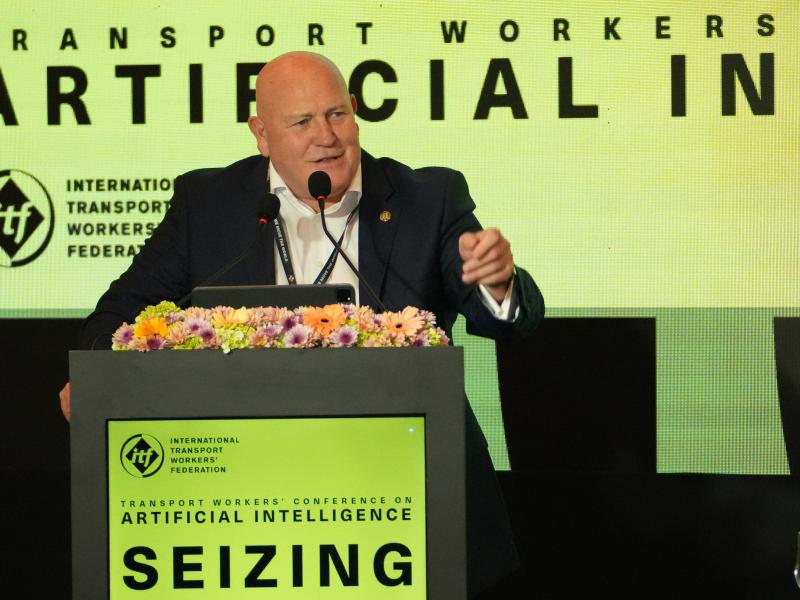
As part of the United Nations' Human Rights 75 Initiative, the International Transport Workers’ Federation (ITF) has joined the push for pledges and outlined how transport workers and their unions are pledging to advance human and labour rights.
Transport workers move the world. The Covid-19 pandemic made this clearer than ever before, as transport workers did what they have always done for countries, economies, and for our societies.
On the 75th anniversary of the Universal Declaration of Human Rights (UDHR), amidst overlapping economic, health, geopolitical and climate crises, and with just six years left to realise the 2030 sustainable development goals, investment in transport and in transport workers can be a driver of social, political and economic change, which, in turn, can help States and non-State actors advance and fulfil human rights. That investment must be equitable, sustainable and include workers, through their unions, at all levels of decision-making.
The ITF commits to taking action in six priority areas to ensure that transport and transport workers are contributing to building a world underpinned by respect for human rights, including labour rights, and social, economic and environmental justice; where all workers are treated equally – with dignity and respect; where everyone can work in a safe environment free from fear and discrimination; and where every worker is paid a living wage that recognises their crucial role in society as the drivers of economic wealth and prosperity. To build a world where the defence and enhancement of human rights is at the heart of our global future.
Safety & health for transport workers
Protecting workers’ lives, preventing injuries and demanding safe workplaces has always been at the heart of the union movement - and always will. At the ITF, protecting the lives and livelihoods of workers, and ensuring that workers have a seat at the table in setting occupational standards for safety and health in the workplace, is our number one priority.
In June 2022, the International Labour Organization (ILO) made the landmark decision to include the principle of a safe and healthy working environment in the ILO’s Fundamental Principles and Rights at Work. In the coming years, we will work across all industrial transport sectors and regions and alongside the global labour movement, to ensure governments and employers take responsibility for making these rights a reality for all workers.
Making transport sustainable
Transport workers are among the most exposed to the climate emergency, while nearly a quarter of global carbon emissions are generated by transport. COP27 recognised the importance of social dialogue and social protection, and in the coming years we will continue to put forward bold just transition plans for transport, demanding that workers have a place at the table in all climate action discussions.
The ITF’s advocacy will recognise the fact that the core elements of any conceptualisation of a just transition is already well-rooted in international human rights law.
Corporate accountability in global supply chains
Across the world, governments have allowed businesses to compete unchecked. As businesses have sought cheaper ways to move people and goods, governments have ripped up labour safeguards to encourage and increase competition. This has eroded labour standards across the transport industry. It is time to end exploitation in global supply chains.
Transport unions are playing a lead role in conducting human rights due diligence. We will continue to campaign to build more accountable, transparent and resilient supply chains in line with our Supply Chain Human Rights Principles. The ITF will support corporate accountability legislation at the national and regional levels, including mandatory human rights due diligence. At the global level, we will continue to support the process for a UN legally binding instrument on business and human rights and related standard-setting action at the ILO.
A say in the future of work
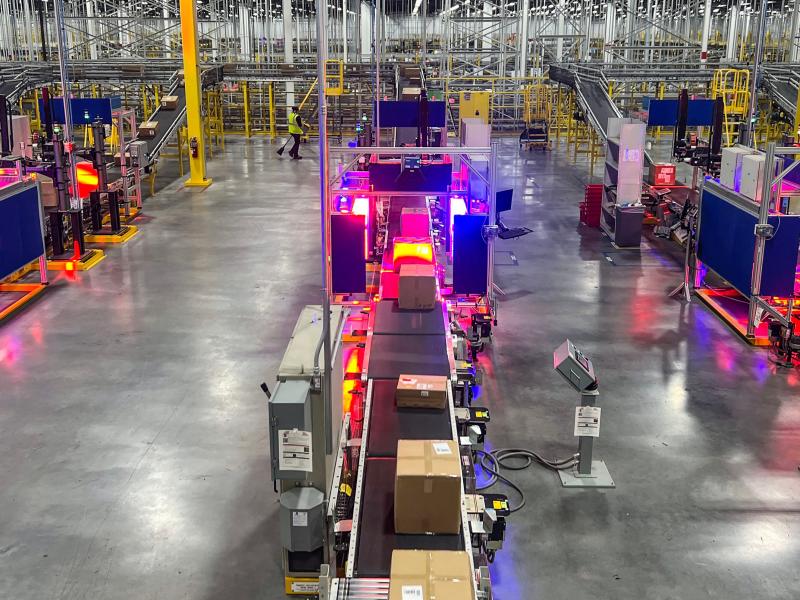
Technology has the power to transform how we transport goods and move people around the globe. It can enhance workers' jobs, increase people’s quality of life and enable better decision making. But without adequate regulation and oversight, technology can become a tool of surveillance, violate fundamental rights and discriminate against both the workers and users of transport systems.
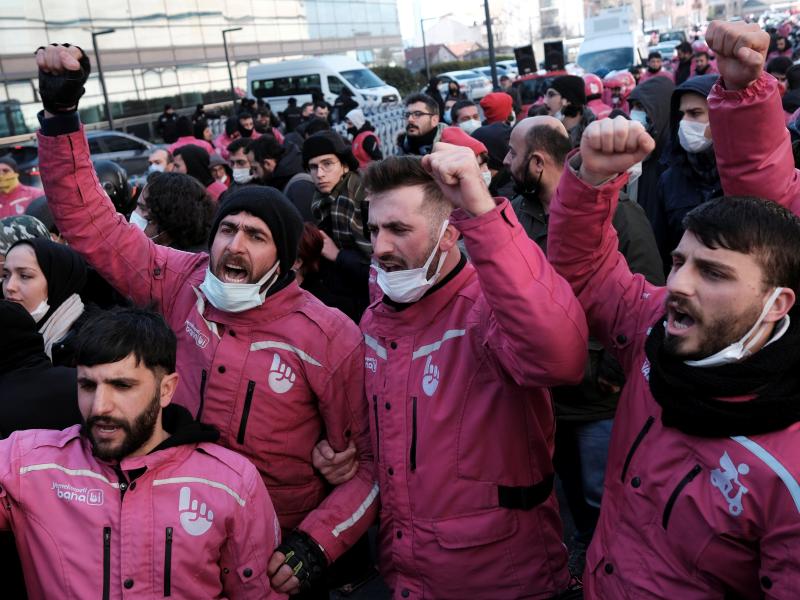
The power of data and new technology, including generative artificial intelligence, is accelerating. At the same time, millions of ‘gig’ and platform workers have organised, secured their labour rights and began bargaining with tech employers. However, the vast majority of platform workers remain outside basic employment regulation. In the coming years, we will continue to fight employment status misclassification with a view to ensuring that all workers have access to human rights. We will also demand that workers have a place at the table to ensure that technology advances decent work and upholds human rights. This can only be achieved through collective bargaining and effective regulation.
Equality for transport workers
Inequality – whether it be based on sex, age, nationality, ethnicity, migration status, religion, disability, social origin, gender identity or sexual orientation – limits societal wellbeing and economic growth. The future of transport needs equal rights and opportunities, democratic decision-making and representative leadership that includes everyone.
In the male dominated transport industry, women face structural barriers to entry and progression, are more vulnerable to violence and harassment, and are underrepresented in decision-making. Addressing the systemic exclusion of women from decent work and achieving gender equality remains a priority. We are committed to strengthening women transport workers’ leadership and organising women workers to ensure they actively participate in the shaping of our industry.
As our leaders of tomorrow, we will support our young workers to have active participation in all decision-making processes, and contribute to addressing important issues such as apprenticeships, platform work, technological changes and green jobs. We need to build on the diversity of our workforce.
Rights for transport workers
Workers around the world are facing attacks on their right to join and be active in their trade unions or raise their voice and act against the ongoing erosion of employment standards, including callous attempts to repress workers’ right to strike.
Transport unions are campaigning across the world to fight back against international capital and governments that deny workers their rights. In response to government attempts to undermine these rights and business models built on exploitation, we will provide legal support for our affiliates and campaign internationally for the ratification and effective implementation of ILO conventions. Through our engagement with governments, companies, investors and other institutions, we will deliver the message that respect for our fundamental rights, including freedom of association as protected under the UDHR, collective bargaining and the right to strike, are non-negotiable. The ITF We will fight to end forced and child labour wherever it exists in transport.
Trade unionists are human rights defenders and without basic civil liberties the concept of freedom of association is rendered meaningless. We will continue to fight for democracy, lasting peace and freedom from oppression in all its forms.
Strengthening human rights globally
Be it related to safety, sustainability, technology, supply chains, public ownership, investment, sanitation rights or youth employment, we will continue to develop policy frameworks that unite our membership and allow us to work with industry actors to deliver change.
In a global economy dominated by deregulation and threats to the rights of transport workers working both within and across borders, we will work to enhance the strength of the UN and wider multilateral system as a means to achieve our six priorities, deliver universal protection of fundamental human rights and achieve wider lasting change.