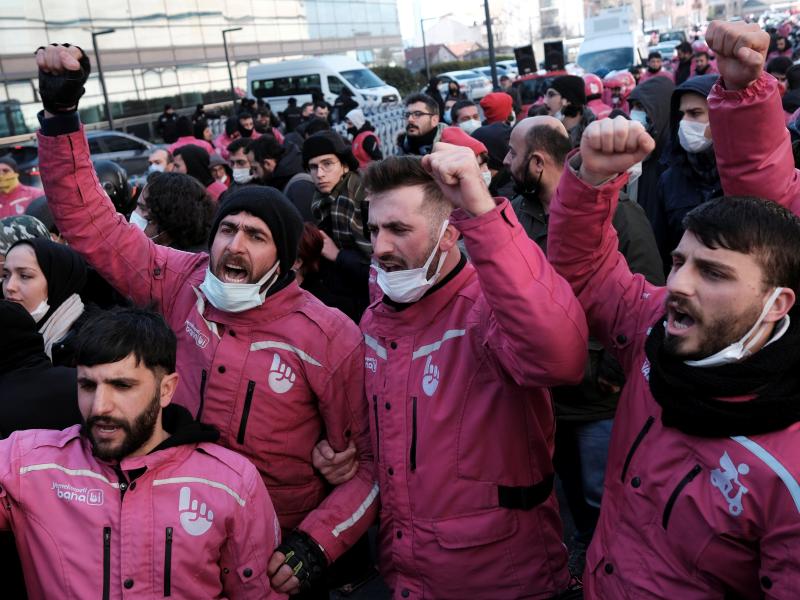
Over 200,000 river boat workers, the beating heart of Bangladesh’s critical inland waterways, have vowed to continue their campaign of industrial action until all of their 10 demands to improve pay, conditions, employment status and safety are met by the government and employers.
Bangladesh’s inland waterway workers are fighting for wage justice, calling for a minimum wage of 20,000 BDT per month (about USD $194) and other critical improvements to employment terms and conditions including:
- A provident and welfare fund (there is no retirement security currently).
- Compensation for families when workers die on the job.
- Landing permission in Indian sea ports, river ports and bunkering points for the purchasing of food, essential goods and accessing medical treatment.
Vessel owners have vowed to shut down critical services rather than redistributing and sharing profits with workers, telling media: “we will not compromise”.
Bangladeshi delegates at the International Transport Workers’ Federation’s (ITF) Inland Navigation Section Conference told global unions about the workers’ struggle for basic rights and a decent, living wage. The unions collectively represent more than 181,000 inland waterway, riverboat, tug, towage and ferry workers.
Crew paid so low; families can’t afford one meal a day
Ashiqul Alam Chowdhury, General Secretary of Bangladesh Noujan Sramik Federation (BNSF), the ITF-affiliated federation whose eight member unions have been active in the strike action, said that workers operating both passenger and cargo vessels had taken action over the employers’ poverty wages.
“These workers face a reality that by the time you take off expenses related to the job, they have less than BDT 4000 (USD $40) left to feed their family for the rest of the month. That’s not even enough for one meal a day to feed our families,” he said.
BNSF has made progress for its members in recent years, successfully negotiating allowances, for food in particularly, but a substantial wage rises is desperately needed.
Interim wage rise ‘not guaranteed’ and ‘still not enough’
The Department of Labour had previously agreed to set up a tripartite meeting with workers and employers to discuss raising the minimum wage, but unions called for strike action after delays to the start of discussions. The workers’ latest strike action ended on November 28 when the government’s Director General of Labour agreed an interim increase in basic pay and forced a period of intensive negotiations between unions and the employer representatives in December to resolve the dispute.
Under the government’s mandate for the negotiating period, workers’ wages have risen on an interim basis to 1200 BDT ($116.50 USD) per month for crew working on vessels up to 1,000 tonnes and 1500 BDT ($145.70 USD) for crew operating vessels over 1,000 tonnes. But there is no guarantee that crew will still have receive these interim rates beyond the negotiation period. In any case, BNSF say that they are still too low. Chowdhury told the conference that the union’s campaign for 20,000 BDT per month was more important than ever.
“The wages for these workers used to be linked to public sector pay increases,” said Yuri Sukhorukov, chair of the ITF Inland Navigation section. “But this was decoupled by the government in 2010, and employers have since allowed workers’ wages to fall further and further behind the rate of inflation, hitting families’ standard of living hard.”
“These workers and their families now face a desperate situation that must be exposed and rectified. The ITF joins with BNSF in demanding that the employers urgently raise the pay of these workers so that they can live in dignity.”
India must also allow seafarers to land
Bangladesh’s relationship with India is a major concern. Since the start of the Covid-19 pandemic, India has not allowed Bangladeshi seafarers to leave their boats when visiting nearby ports such as Kolkata. Trade between the two countries is routine because of the proximity of West Bengal to Bangladesh. Seafarers have been prevented from accessing shore leave even to get medical care, medicines, food and other basic essentials.
“We have reports that at least 10 people have died as a result of being denied access by Indian authorities to medical care or to simply to allow workers to leave their boats to get medicine. This needless loss of life is a tragedy and an absolute inditement on the policymakers,” said Sukhorukov.
“Inland navigation workers and their unions are united behind these workers. We back their demands and urge Indian authorities to ease these life-threatening restrictions, and urgently set up a drop-in centre at Kolkata so that workers can, at least, get the most essential supplies when they arrive in the port. We call on the Bangladesh government to raise the workers’ concerns forcefully with its Indian counterparts, with a view to preventing any more unnecessary deaths,” concluded Sukhorukov.
BNSF’s demands for Bangladeshi inland waterway workers:
- Making sure every worker is issued official employment documentation, including appointment letter, identity card and service book.
- A minimum wage of 20,000 BDT ($194 USD) per month.
- Creating a provident fund, and a welfare fund for the social security of crew.
- Compensation for families, for accidents and deaths at work.
- Stopping a fuel pipeline that workers oppose on national interest grounds.
- Addressing the defined the river route for night movements of sand-carrying bulkheads.
- Working with governments to stop terrorism, extortion and acts of piracy affecting crew.
- Shore leave for workers crossing or entering the Indian border as part of their job.
- Requiring smaller ships to follow the cargo transportation policy of Chittagong port.
- Department of Shipping to cancel the lease of Charpara Ghat and stopping “all types of irregularities and mismanagement” of the department.