Ukrainian Ambassador, UN agencies, ITF and MTWTU come together at ITF House for second event in support of Ukraine’s seafarers and maritime sector.
The Marine Transport Workers’ Trade Union of Ukraine (MTWTU), an International Transport Workers’ Federation (ITF) affiliate, brought together UN agencies, employers and educators in London on Wednesday for the second Ukrainian Maritime Forum.
Speakers expressed solidarity and admiration for the continued and crucial role played by Ukrainian seafarers in the global shipping industry, despite the challenges of war. At least 40 seafarers have been killed in Black Sea attacks in 2026, with it now known as the world’s most dangerous shipping route.
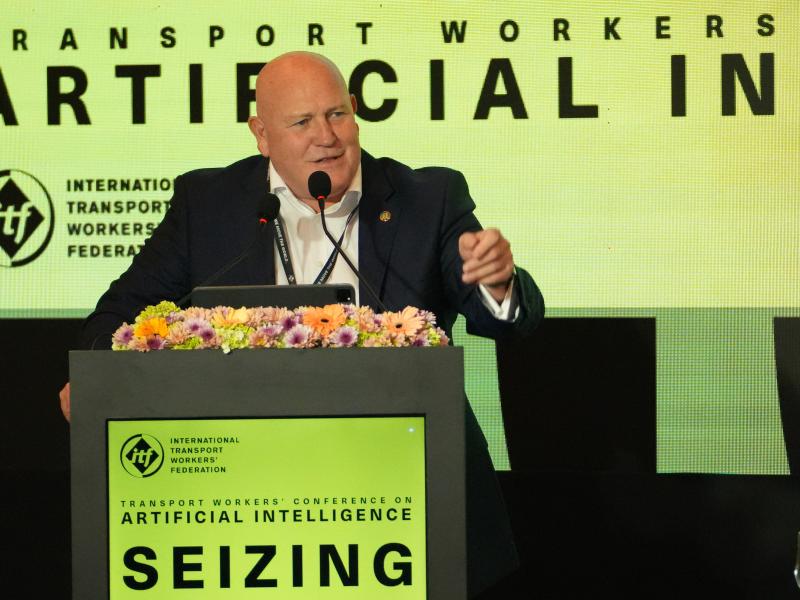
ITF General Secretary Stephen Cotton attended, alongside Ambassador Extraordinary and Plenipotentiary of Ukraine to the United Kingdom of Great Britain and Northern Ireland, General Valerii Zaluzhnyi, Maritime Safety Director at the International Maritime Organisation (IMO), Damien Chevallier, Head of the Maritime Team at the International Labour Organisation (ILO), Beatriz Vacotto, CEO of the International Maritime Employers’ Council (IMEC), Francesco Gargiulo, MTWTU Chairman, Oleg Grygoriuk, and Sergii Gurskyi, Head of State Service, Maritime, Inland Waterway Transport and Shipping of Ukraine.
ITF General Secretary, Stephen Cotton said: “Ukrainians did not ask for this war. The war came to them. Ukrainian transport workers, dockers and seafarers are living in a real-time war zone – but vessels continue to be serviced, cargo loaded and unloaded, and the industry continues to operate. That is why it is so important to continue recognising and supporting the high professional standards of Ukrainian seafarers and maritime workers. We must do everything possible to ensure that they experience international solidarity, not only through words of support, but also through concrete action.”
Delegates heard that despite the danger and disruption of the conflict, hundreds of Ukrainian seafarer cadets had graduated in the past year, and that numbers applying had increased on previous years. Maritime training centres and universities had adapted to wartime conditions by relocating, moving classes online and creating classrooms in underground shelters. The process of digitisation and modernisation of seafarer training and certification was moving forward, despite the conflict.
General Valerii Zaluzhnyi said: “The war unleashed by Russia against Ukraine has made life considerably more difficult for Ukrainian seafarers and their families. Many are forced to spend long months at sea, unable to see their loved ones and constantly worrying about their safety back home. The skill and hard work of Ukrainian seafarers keeps global shipping moving safely, bringing food, fuel and other goods around the world. Russia’s war has made life much harder for them and their families. We must help them work safely, keep their skills up to date and get the support they need.”
Zaluzhnyi thanked the Secretary General of the IMO, Arsenio Dominguez, for the IMO Council’s formal condemnation of the escalating attacks on merchant shipping in the Black Sea and urged further support for seafarers.
IMO Maritime Safety Director Damien Chevalier said: “When seafarers are injured, detained, stranded, abandoned, or exposed to conflict they need support. The IMO works closely with partners, including the ITF, to provide that. The experience of Ukrainian seafarers reminds us why this matters.”
Beatriz Vacotto, Head of the ILO’s Maritime Team, said: “Ukrainian seafarers are internationally recognised for their professionalism, their competence, and their contribution to global shipping. We must work together to ensure that Ukrainian seafarers do not lose their place in the international market.”
Ukraine is one of the world’s largest suppliers of labour to the international shipping industry. It ratified the Maritime Labour Convention (MLC) in 2015, committing to implement its standards for Ukrainian seafarers and ships flying the Ukrainian flag. Implementing MLC standards contributes to the broader reforms required for European Union membership.
Francesco Gargiulo, CEO of IMEC, said: “Ukraine is one of the world’s great maritime nations. For many years IMEC has invested in maritime education and training in Ukraine, helping them access online learning, training, and professional development. The future of Ukrainian maritime education matters to all of us.”
MTWTU Chair Oleg Grygoriuk said: “When I started the first Ukrainian Maritime Forum back in 2024, I thought it would be the first and the last, and that things would get back to normal. Unfortunately, that has not happened. It’s an incredibly challenging job to be a Ukrainian seafarer. Having you all here – shipowners, unions, joint projects – gives me and my team inspiration.”
ENDS