When Sheela Naikwade joined Maharashtra State Transport Kamgar Sanghatana (MSTKS) in 1995, she was one of very few women members. Women were sidelined, their concerns unheard, their participation discouraged. Unions reflected the male-dominated structures of our society.
Sheela refused to accept this and started listening to the experiences of women working in public transport. She found that women workers lacked the most basic rights - no toilets, no restrooms, no secure or dignified working hours.
She began organising and built a collective. They demanded a voice.
Strong unions need women. Women must have spaces to organise. Women’s issues must be part of the bargaining agenda. Women must be in leadership.
Together, they organised protests, mobilised women across depots, divisions and regions and pushed for change.
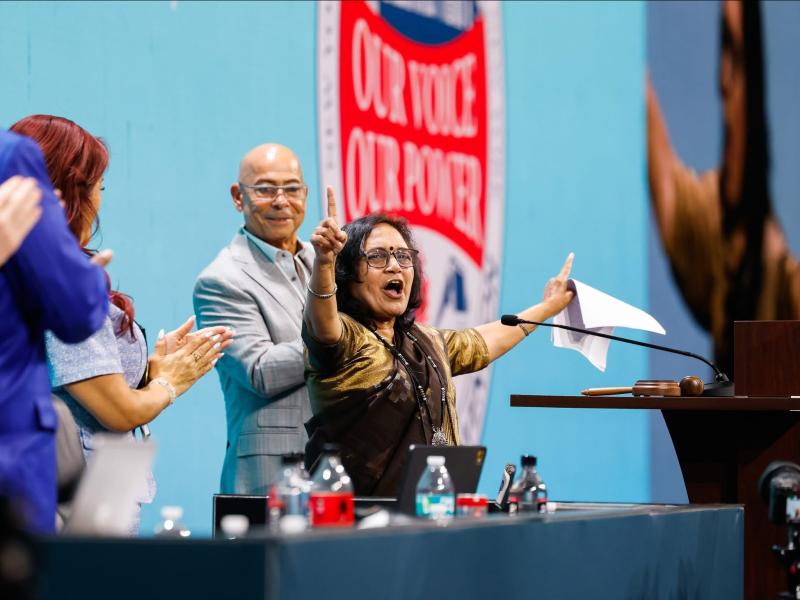
In 2006, Sheela led a long campaign demanding structural reform. In 2015, they won a historic resolution to reserve two leadership positions for women at every level—from the depot to the central office.
Now in Maharashtra, there are over 500 women leaders at depot level, 65 women leader at the regional level, and 3 women leaders in positions of highest central leadership.
This leadership has achieved victories against undignified uniforms, sexual harassment, and discriminatory practices that penalised women for maternity, childcare and miscarriage leave.
They surveyed women workers and found that almost 60% of women conductors suffer miscarriages due to harsh road conditions and work duties carried out during pregnancy. This research led to the transport minister granting 3 months additional maternity leave and introducing lighter workloads during pregnancy.
This is what real union power looks like.