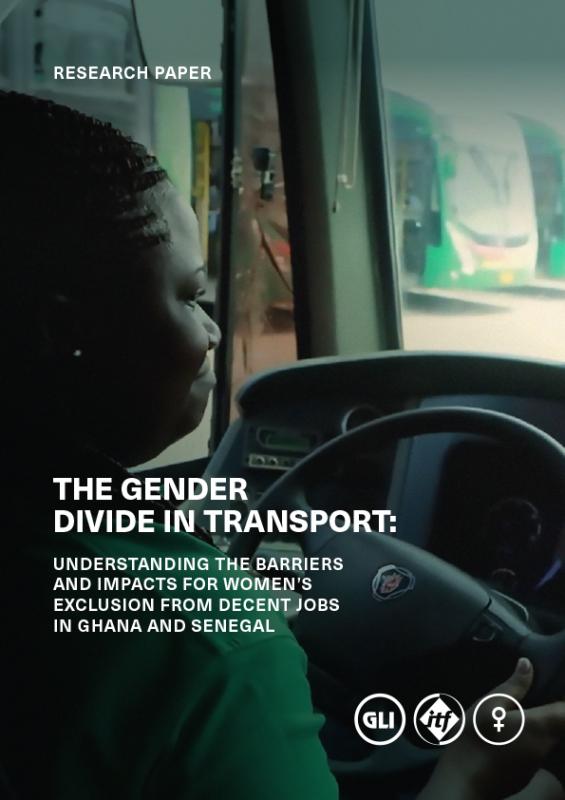
A new ITF report, The Gender Divide in Transport, shows how discrimination, unsafe conditions and structural inequalities are systematically excluding women from decent transport jobs in Ghana and Senegal.
Drawing on surveys, focus groups and interviews with over 100 women transport workers, the research shows that:
- Nearly 80% of respondents say women face greater barriers to getting work or progressing in the sector.
- 71% believe women experience violence and harassment disproportionately, often during commutes, in customer-facing roles, and in male-dominated operational areas.
- 60% report a lack of safe, gender-responsive workplace facilities such as safe toilets, changing rooms or rest spaces – a major deterrent for women entering or staying in the industry.
- Women remain concentrated in lower-paid administrative roles, while men dominate technical, operational and leadership positions.
- Unequal unpaid care responsibilities and inadequate maternity provisions further limit women’s ability to stay and progress in the sector.
Natalie Swan, ITF Women Transport Workers’ and Gender Equality Officer, said:
This research shows that women’s exclusion is built into the structures and daily realities of transport work. Ending it means redesigning workplaces so women can enter, stay and thrive – with safety, training and equality treated as non-negotiable.”
Meryem Halouani, Chair of the ITF Women Transport Workers’ Committee from Morocco’s UMT union, said the report sends a powerful message not only for West Africa, but for women transport workers everywhere.
“The experiences of our sisters in Ghana and Senegal reflect what too many women across the industry face every day: discrimination, insecurity and being pushed into the lowest-paid work. Women are already holding the transport system together – now they must have equal rights, equal opportunities and workplaces that respect their dignity.”
Halouani added that unions are ready to use the findings to push for stronger organising and employer accountability.
A roadmap for change
Based on the evidence, the report identifies clear principles to address systemic exclusion, including:
- Addressing the full employment cycle fro tm access and recruitment to progression and leadership.
- Recognising and responding to the link between violence and harassment and women’s exclusion.
- Creating workplaces that recognise the reality of women’s caring rights and responsibilities.
- Integrating a gender transformative approach into formalisation processes, especially in the informal economy.
- Strengthening women’s organising and leadership in unions.
Marian Atuguba, Assistant General Secretary of the Maritime and Dockworkers' Union (MDU) in Ghana, said: “For years, women transport workers were told unsafe conditions and lack of opportunities were ‘just the job.’ We knew these were systemic barriers. Now we have proof: what was normalised as industry practice is gender-based discrimination. Together, we’re making it visible, undeniable, and political.”
The ITF will use these findings to drive stronger advocacy, organising and engagement with employers and governments as part of its global priority to end the systemic exclusion of women from decent jobs in transport.