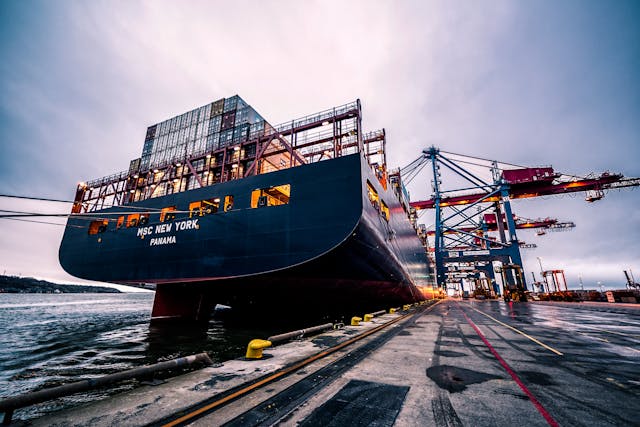
More than 80 percent of world trade is carried by sea. Companies are reliant on the maritime industry and they have a responsibility to respect seafarers’ human rights. But shipping remains a human and labour rights blind spot.
Whether reliant on bulk import or export, sourced raw materials or components, or container ships for distribution of final products, all companies should thoroughly investigate how their goods are moved by sea.
The maritime industry relies on a complex web of actors and the ignorance of industry outsiders to obscure where employer duties lie, evade accountability for breaches of seafarers’ rights, or to allow duty holders to disappear altogether. Risks are compounded by seafarers being uniquely vulnerable to exploitation due to living and working in an environment of isolation and confinement on board a ship under the control of their employer, shipowner or agent for the duration of their contract.
Monitoring by authorities is only feasible when ships call at port. Port state authorities have legal duties under the International Labour Organization (ILO) Maritime Labour Convention (MLC), but they often fail to ensure adequate labour conditions for seafarers because they are preoccupied with ensuring the mechanical and environmental safety of the ship in the short time it is docked at the port during loading or discharging operations.