
The group has also claimed responsibility for a bomb attack on the central bus station in the Nigerian capital Abuja which killed more than 300 people on 14 April, including nine bus workers who were members of ITF affiliate the National Union of Road Transport Workers (NURTW).
Union representatives from across West and East Africa gathered in Abuja this week to apply for their visas and prepare to attend the ITF congress in Sofia, Bulgaria in August. They used the opportunity to add their voices to condemnation of Boko Haram, which has attracted international attention over the past month.
ITF Africa representatives and ITF assistant general secretary Stuart Howard met with members of the NURTW at the bombed bus station, including the branch secretary whose members were killed in the attack. Howard said: "As trade unionists we stand for unity and solidarity. We strive for better conditions for workers. Boko Haram is intent on making everyday life difficult and full of fear for ordinary people; workers and schoolchildren. There must be action taken to bring this climate of fear and intimidation to an end."
View pictures from the bus station and affiliate action in Abuja >>
During the week participants also received pre-congress training and visited the NURTW offices where they were given an overview of the union's work. Union projects include the development of 250 homes, the provision of antenatal health care and an insurance scheme for workers.
ITF Abuja delegation condemns kidnap of schoolgirls and attacks on workers
news
ON THE GROUND
news
Press Release
‘Mind At Sea’: ITF campaign to protect seafarers’ mental health goes global
On World Mental Health Day, the ITF launches a campaign to bring wellbeing conversations into ship visits and press for stronger protections for seafarers and their families. The International

news
Erwin De Deyn
The International Transport Workers' Federation (ITF) is deeply saddened to mark the passing of Erwin De Deyn, former President of BBTK-SETCa. Erwin was a committed internationalist who devoted his
news
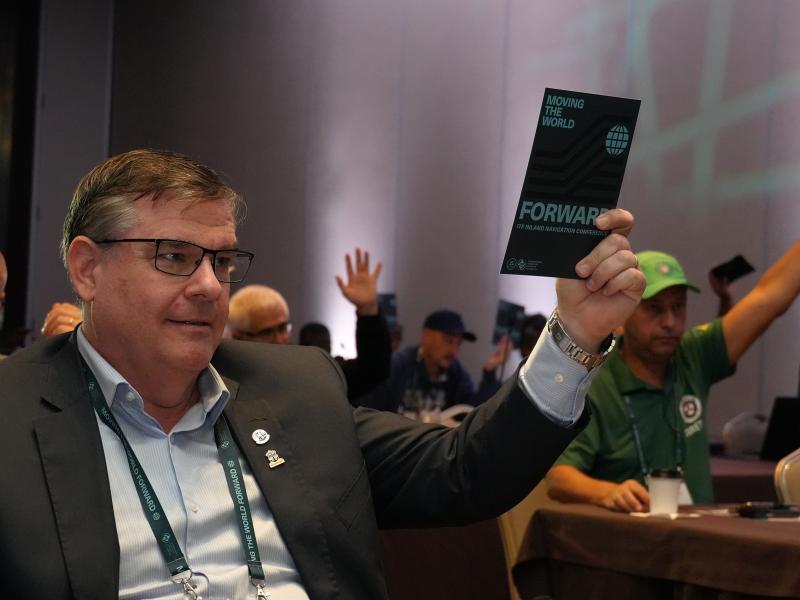
Inland navigation unions set course for stronger worker protection
Delegates adopt eight motions and two statements, covering conflict-zone safety, the Paraguay-Paraná Waterway, the Amazon, river cruising and a new general framework agreement for tug and inland