We, the undersigned Global Union Federations (GUFs) representing workers across the Asia Pacific region, issue this joint statement with the gravest concern following the announcement by the newly formed Government of Nepal of its intention to ban selected trade unions — in particular those representing workers who deliver public services. We call on the Government to immediately and unconditionally withdraw this proposal.
A Violation of International Law and Nepal’s Own Constitution
Nepal has ratified ILO Convention No. 98 (Right to Organise and Collective Bargaining) which, together with the 1998 ILO Declaration on Fundamental Principles and Rights at Work, guarantee all workers — including workers who deliver public services — the right to form and join organisations of their own choosing, free from government interference. All member states of the ILO are bound by the core conventions. The proposed ban is a clear and direct breach of these obligations. This proposal also violates Nepal’s own Constitution. Articles 34 and 35 of the Constitution of Nepal (2015) explicitly guarantee the right to form trade unions and engage in collective bargaining. Any executive or legislative action to ban trade unions would be constitutionally unlawful.
Workers Decide — Not Governments
The democratic right to form, join, or affiliate with a trade union belongs exclusively to workers — it is not the prerogative of any government. Public services workers perform essential services for society, including delivering vital public health services, water and sanitation, energy supply, local government services, public works, welfare delivery amongst others. These workers hold the same fundamental rights as workers doing any other job. To single them out for the denial of those rights amounts to authoritarianism, and without any lawful basis under international or domestic law. Trade unions are not adversaries of the state; they are an indispensable pillar of democratic governance.
Severe Damage to Nepal’s International Standing
Should this proposal proceed, the consequences will be serious. Nepal would face:
- Scrutiny by the ILO’s Committee on Freedom of Association and Committee of Experts on the Application of Conventions and Recommendations.
- Jeopardy to preferential trade arrangements from countries requiring adherence to core ILO labour standards (like the EU)
- Condemnation through UN human rights mechanisms, including the Universal Periodic Review.
We call upon the Government of Nepal to:
- Immediately and unconditionally withdraw the proposal to ban trade unions.
- Uphold Articles 34 and 35 of the Constitution of Nepal, guaranteeing the right to organise for all workers.
- Reaffirm its obligations under ILO Core Conventions and the 1998 ILO Declaration.
- Immediately implement the ILO Committee on the Application of Standards 2025 Recommendations1
- Engage in genuine social dialogue with trade unions on any proposed reforms to labour relations.
We stand in full solidarity with the workers and trade unions of Nepal and will take all necessary steps at the international level in defence of their fundamental rights.
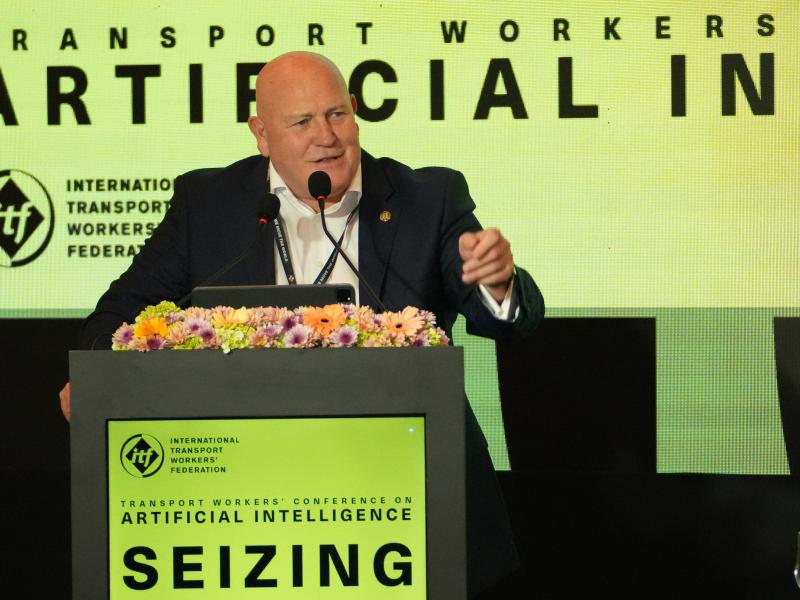
Responding to the joint statement and the alarming developments in Nepal, ITF Asia Pacific Regional Secretary Scott McDine said:
“The international community is watching closely. The Government of Nepal’s move to ban trade unions will tarnishes its standing nationally and internationally and represents a direct attack on the democratic voice of the people in Nepal. Trade unions are not a threat to society; they are a cornerstone of it. To move against them will trigger serious negative repercussions."

1. 2025 ILO Report of the Committee on the Application of Standards