
President Obama withdrew the country’s eligibility for the African Growth and Opportunity Act (AGOA) last Thursday. Michael Froman, the US trade representative, explained that the decision was taken in light of Swaziland’s continuing labour rights abuses. AGOA status enables countries in sub-Saharan Africa to get duty-free access to the US market on thousands of products, making it cheaper to enter the USD 3 trillion import market.
The ITF has long campaigned for improved workers’ rights in Swaziland, most recently campaigning for the release of imprisoned union lawyer Basil Thwala. During a March 2014 visit to the country, ITF assistant general secretary Stuart Howard led a high-level mission to the country, which met with government representatives and US embassy officials. Howard said: “In March, we personally warned the government that its denial of union rights was likely to lead to its losing AGOA. They refused to listen. Now they're paying the consequences.”
While Thwala was released just days before the US Department of Trade was scheduled to review the AGOA agreement, unions including the ITF-affiliated Swaziland Transport & Allied Workers’ Union (STAWU) continue to face government harassment.
US axes Swazi trade deal over rights abuses
Notícias
EM CAMPO

Notícias
ITF fortalece a organização sindical do setor offshore na América Latina
Nesta terça-feira, 13 de outubro, foi realizada, na Cidade do México, a reunião do Subgrupo Offshore da Federação Internacional dos Trabalhadores em Transportes (ITF) para a América Latina, com a
Notícias
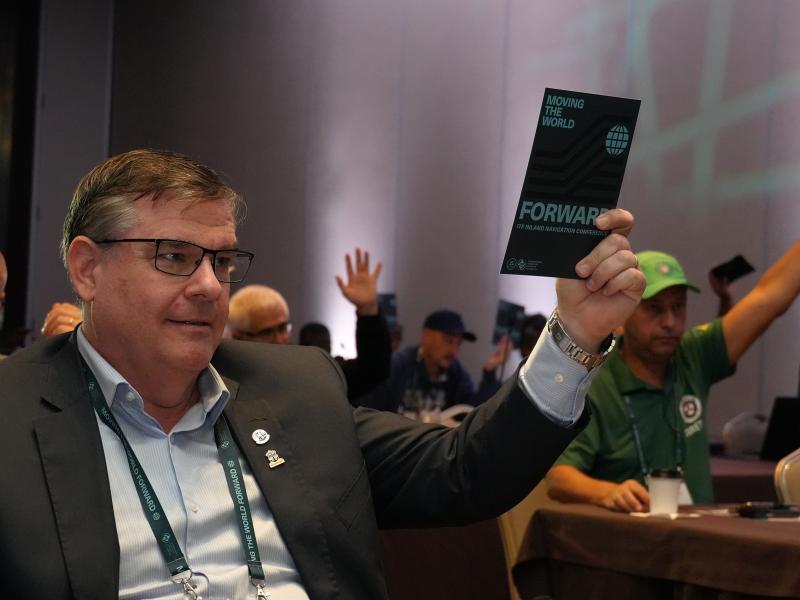
Sindicatos da navegação interior traçam rumo para uma maior proteção dos trabalhadores e trabalhadoras
Os delegados aprovaram oito moções e duas declarações que abrangem a segurança em zonas de conflito, a Hidrovia Paraguai-Paraná, a Amazônia, os cruzeiros fluviais e um novo Acordo-Quadro Geral para os
Notícias
Comunicado à imprensa
Sindicatos do setor de transportes adotam princípios globais para colocar trabalhadores no centro da IA
Sindicatos do setor de transportes que representam mais de 16,6 milhões de pessoas trabalhadoras em todo o mundo adotam reivindicações globais para regulamentar o uso da inteligência artificial no