Newspapers described it as the biggest strike in decades. On Saturday October 1, more than 50,000 workers on the UK’s rails were on strike. Members from the RMT, ASLEF, TSSA, and Unite the Union shut down almost the entire rail service in the country.
The strikes, with more days of action planned, are part of action that has been ongoing for months. The unions are standing up for the safety and sustainability of the UK’s railways in the face of brutal, short-sighted attacks on the service by operators.
Network Rail, the company in charge of UK railway infrastructure, are planning to slash thousands of safety-critical roles, but unions are fighting to defend these jobs, as well as the pay and conditions of their members.
In a classic demonstration of corporate greed, rail operators are proposing these cuts at the same time as paying out hundreds of millions to shareholders and millions in executive pay.
And Britain’s railway workers are not alone. Around the world, unions are engaged in the same struggles for safe and sustainable rail.
In Belgium, where the railways are publicly owned, unions are planning strike action demanding urgent measures to stop and reverse the deterioration of services and conditions after years of underfunding. Their struggle underlines the fact that public ownership alone is not enough, without proper public investment and democratic control.
France’s CGT are also planning strike action this month, demanding increases and protections to the minimum wage and pensions. Again, while corporate bosses and the richest individuals in France see their profits soar, workers are being asked to pay the price: a price that CGT members simply refuse to cough up.
In the US, the threat of unprecedented strike action across freight rail services secured workers a 24% wage increase over the coming years, as well as an $11,000 payout pending ratification. This strike, had it gone ahead, would have been the first in the industry in 30 years, and analysts warned that it would’ve cost the US economy more than $2 billion a day - underlining the concrete power that transport workers hold when they are organised.
In Korea and India, ITF affiliates are fighting privatisation and demanding greater supply chain accountability.
In Pakistan, the tragic and devastating impact of climate change on the lives and livelihoods of transport workers has been made clear. Due to the flooding, railway operations have come to an almost complete halt, costing the economy Rs90m a day. This has led to railway companies refusing to pay their staff, despite the fact that these workers are busy day and night working to restore services and infrastructure. Many of these workers are doing this despite having been personally devastated by the flooding.
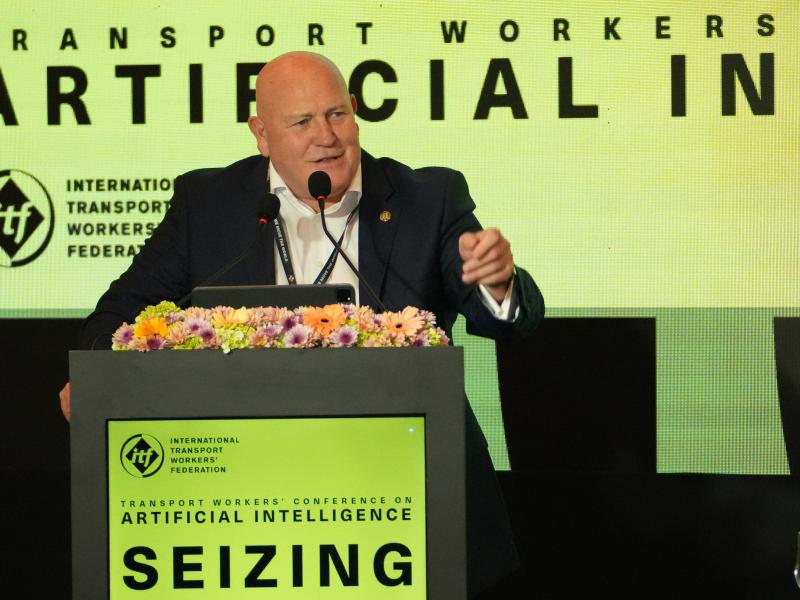
David Gobe, chair of the ITF Railway Section, said: “All around the world, it is the same story. Railway workers are on one side having faced decades of declining standards and conditions whilst keeping their countries moving, and enduring the brunt of privatisation, austerity and climate change. And on the other side, profits continue to break records and shareholders continue to reap rewards, while the services and infrastructure that passengers and the public need are driven into the ground.”
“This is why unions refuse to stand by, because their members are seeing the disparity in wealth grow irrespective whether they live in the UK, Belgium, Korea, India or in my home country France.”
“Workers are saying enough is enough and are taking a stand for their fair share, and for cities and countries to be equipped with the safe and sustainable railways we need to move our people,” said Gobe.
Across the world, ITF affiliates are fighting for Safe and Sustainable Rail for all workers. The campaign demands:
- Safety – ensuring railways are properly staffed and that staff have decent pay and conditions, as well as proper training on occupational health and safety
- Sustainability – ensuring investment and expansion of railways, lobbying for a modal shift as part of reducing carbon emissions from transport
- Public Ownership – demanding railways be in public hands, accountable and democratic and receive proper investment
- Social Justice – ridding railway supply chains of exploitation and ending the race to the bottom created by the competitive tendering model.