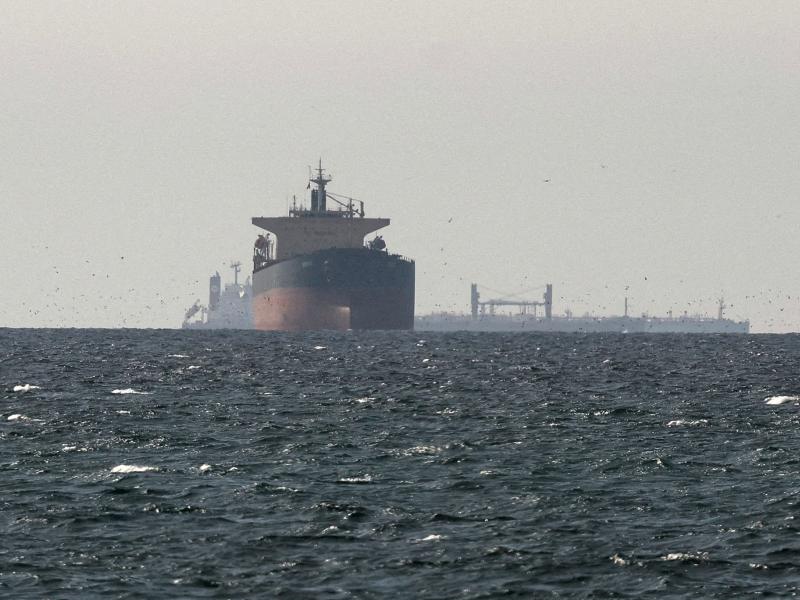
Mohammed and his three crewmates had been effectively in captivity, abandoned for five years, on a tugboat in Mumbai harbour.
Without power or fuel, the Ghanaian seafarers managed to survive on board with the occasional delivery of food and water from local fishermen, as the vessel’s owner ignored their pleas for repatriation and their agent seemingly forgot about them.
The crew’s decision to contact the International Transport Workers’ Federation (ITF) and National Union of Seafarers of India (NUSI), and to file a suit in the Bombay High Court, finally led to the seafarers return to their homes and families in June 2016.
They were home, safe, but without their owed wages.
ITF Inspector Louis Gomes lodged a claim on their behalf for their wages, and in October 2018 their seven-year nightmare was drawn to a close with the successful end to the case and their wages returned almost in full.
Stranded on a tugboat two kilometres off Mumbai
The nightmare began for Mohammed when he signed a contract from Ghana with Greek company, Minerva Maritime, to join the tugboat Seabulk Plover on April 3, 2010, along with 12 other Ghanaian seafarers.
In the course of towing a vessel from Sri Lanka to India, on June 11, 2011 a heavy storm blew up just off the coast of Mumbai. The towing line broke in heavy seas and the vessel came aground in Mumbai harbour, around two kilometres from the city.
The tugboat was arrested and detained in Mumbai inner anchorage and after three months in court the vessel was released.
And then the real ordeal began. They had very little food, water or fuel. The company, in league with their agent, signed off some of the crew without giving them their salaries.
Mohammed, the 3rd Officer and his crewmates Issah Sawudu 2nd Engineer, Mohammed Iddrisu, AB, and Francis Abakah, Oiler, were left stranded on the tugboat.
This was yet another instance of seafarers being cast aside without any regard, denied the most basic of human rights, and being treated as nothing more than modern day slaves.
The company stopped all supplies and blocked the communication lines. They were left to sleep in total darkness.
“We stayed on board like slaves. There was no access to medication, our children could no longer go to school, and our families were evicted from their houses,” said Mohammed.
“We started begging for food and water from local fishermen, and we sought help from Mr Finlay Macintosh from the ITF in London and he appointed Mr Louis to take up our case.
“Mr Louis and the NUSI started visiting us on board and assured us everything would be okay. Mr Louis and Mr Steve Trowsdale visited us once and assured us that they would work to get us off the vessel and get our salaries,” he said.
And they did just that, with $180,882.00 USD in wages paid to the crew.