The International Transport Workers’ Federation (ITF) and UITP, the International Association of Public Transport have released the first global employment report on urban public transport in over a decade – revealing critical workforce gaps just as cities aim to expand sustainable public transport.
Produced in partnership with UITP the report reveals that nine million people now work in urban public transport worldwide – a 20% increase since 2009. But the sector still falls 2.4 million jobs short of where it should be, based on population growth and service demand.
The findings show that drivers, engineers, and maintenance roles remain chronically under-resourced, with an ageing workforce and critical shortages posing challenges for service delivery and sustainability.
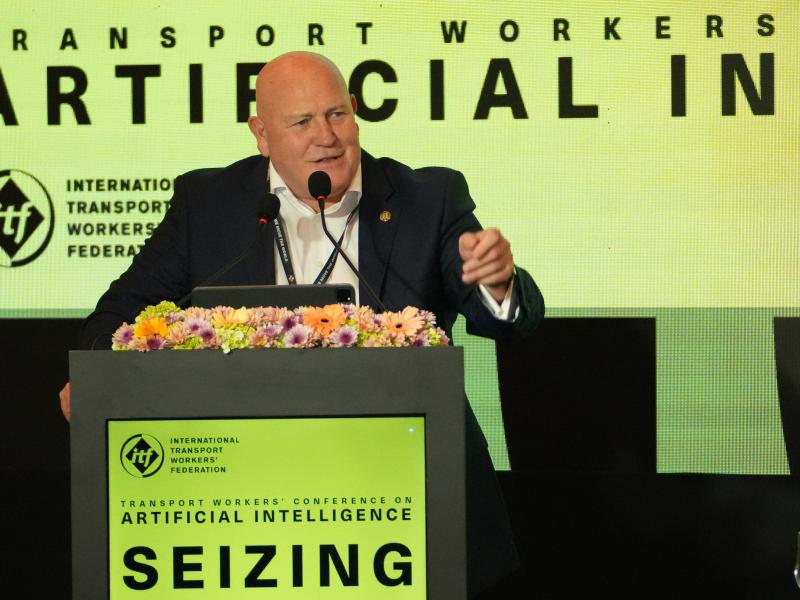
“This research confirms what transport unions have been saying for years, urban public transport cannot succeed without serious investment in its people,” said Stephen Cotton, ITF General Secretary. “Technology and green policies may be transforming our cities, but the success of this transformation depends on the workers who keep them moving. That’s why social dialogue, decent work, and inclusive workforce planning are more important than ever.”
Key Findings from the Report:
- 1 in 4 transport workers is set to retire by 2035, yet young workers under 35 have dropped across most operational roles.
- Despite rising from 14% in 2011, women still make up for just 22% of the global public transport workforce – still only one woman for every four men.
- Engineering and driver jobs are among the most difficult roles to fill, while digital and EV-related roles are expanding rapidly.
- Regions like Latin America and Asia-Pacific show the highest growth, but many systems report staffing shortages across key functions.
- Despite electric and digital transitions, many workers remain under-trained or left behind, especially older employees.
The report also highlights where trade unions and social dialogue are driving progress, including:
- Shorter, more flexible workweeks negotiated in Chile and Ireland.
- Dedicated training centres for electric vehicles and AI-driven systems.
- Youth and female recruitment programmes in South Africa, Chile, and Indonesia.
The ITF is calling on governments, transport authorities, and employers to treat workforce development as a climate and equity imperative. This includes investing in decent work, ensuring worker voices in technology adoption, and embedding gender equity into future mobility systems.
Modelling by the ITF and C40 Cities shows that climate-focused investment in public transport could create 650,000 jobs in just five cities – and tens of millions globally if cities double their public transport use by 2030.
“This is not just about buses and trains, it’s about building sustainable, resilient, inclusive cities that work for everyone,” said Cotton. “We know where the jobs are. Now we need the political will to fund them, and the partnerships to make them decent. Public transport is climate action, and workers are climate actors. The time to act is now.”