
This publication delivers further on the ITF’s Congress mandates in 2002 and 2006 to strengthen its work on HIV/AIDS and challenge the stigma and discrimination surrounding the disease.
Writing in the introduction to the new manual, ITF acting general secretary Steve Cotton said that much had changed since 2004, when the ITF published its first version of the guide.
He commented: “It’s not just a matter of updating statistics but of taking on board the evolving dynamics of the epidemic, the progress that has been made in both prevention and treatment, and the development of new tools and approaches. ITF affiliates have undertaken major programmes and there are many achievements to report.”
He warned against complacency and vowed the ITF would continue to work with its affiliates “to combat the still very real threat that AIDS presents to the rights, health and livelihoods of working people and their families”.
The manual provides hands on guidance; best practice examples from affiliates with a long track record of action on the issue; and practical support to unions in dealing with HIV/AIDS in the workplace and their fight against stigma and discrimination. It includes learning activities, a round-up of training methods and techniques, and a summary of basic information about HIV/AIDS.
Download Action on HIV/AIDS – ITF handbook for transport unions (68 pages).
ITF launches new HIV/AIDS manual for affiliates
Notícias
EM CAMPO
Notícias
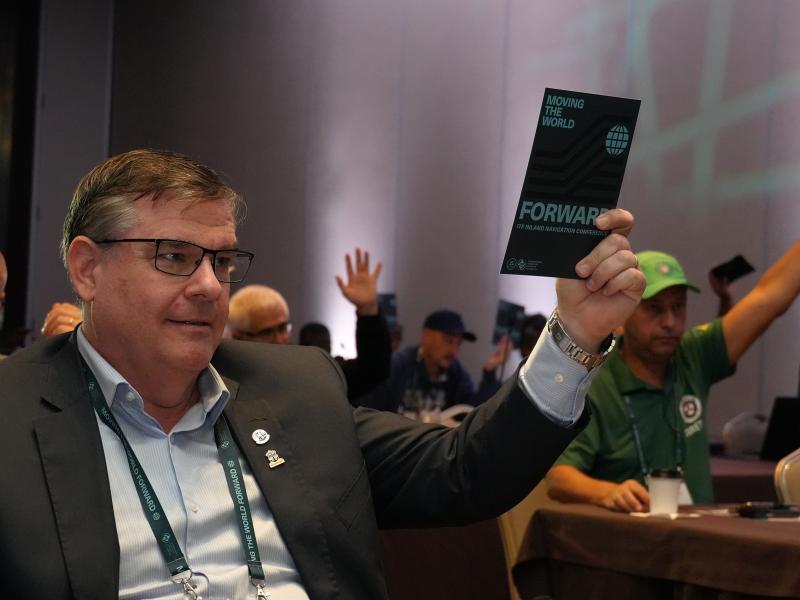
Sindicatos da navegação interior traçam rumo para uma maior proteção dos trabalhadores e trabalhadoras
Os delegados aprovaram oito moções e duas declarações que abrangem a segurança em zonas de conflito, a Hidrovia Paraguai-Paraná, a Amazônia, os cruzeiros fluviais e um novo Acordo-Quadro Geral para os
Notícias
Comunicado à imprensa
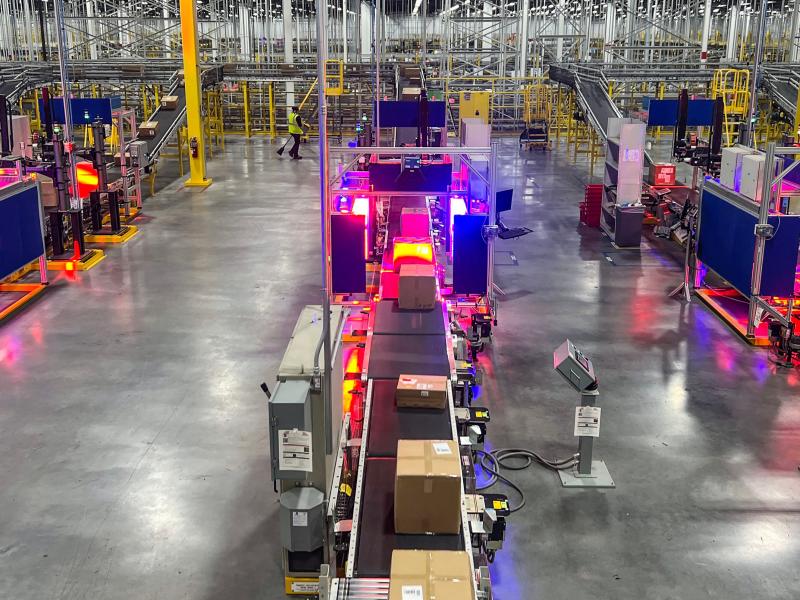
Sindicatos do setor de transportes adotam princípios globais para colocar trabalhadores no centro da IA
Sindicatos do setor de transportes que representam mais de 16,6 milhões de pessoas trabalhadoras em todo o mundo adotam reivindicações globais para regulamentar o uso da inteligência artificial no
Notícias
Comunicado à imprensa
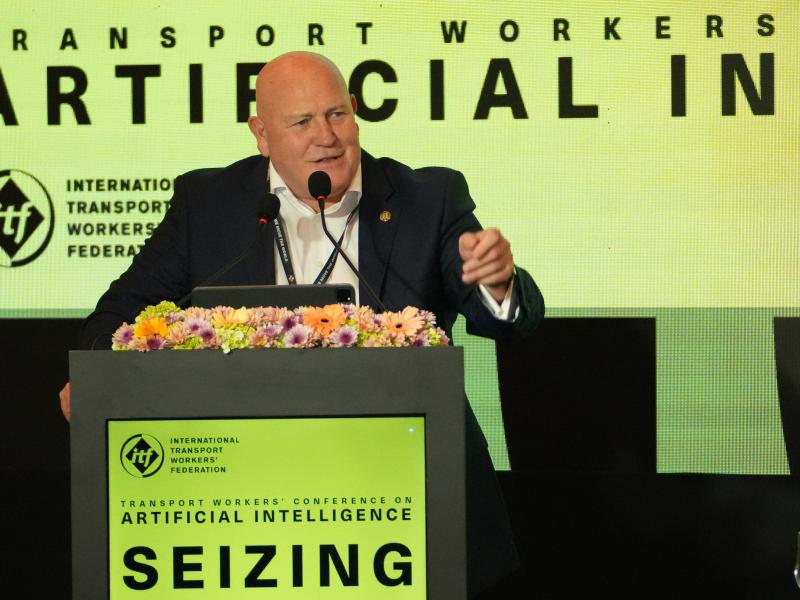
Trabalhadores em transportes se reúnem em Colombo para assumir o controle da IA
Sindicatos que representam milhões de pessoas trabalhadoras em transportes em todo o mundo estão dando início a uma conferência histórica de quatro dias para pessoas trabalhadoras em transportes sobre