COP28, Dubai, United Arab Emirates – On International Civil Aviation Day, the International Transport Workers’ Federation (ITF) is today calling on governments the world over to implement subsidies and incentive programmes to ramp up the production of sustainable aviation fuels (SAF) to ensure the industry meets its decarbonisation targets and enable it to focus on upskilling and retaining staff as part of a just transition to a sustainable future.
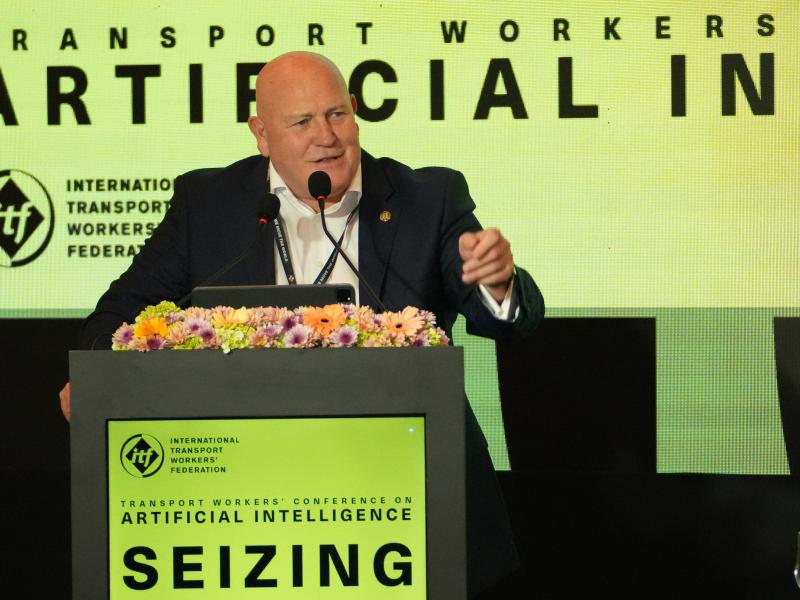
“Right now, airlines are trying to stimulate SAF production by creating confidence in demand through offtake agreements for future production,” said ITF Assistant General Secretary Rob Johnston speaking at COP28 in Dubai. “But the simple truth is that’s not enough. There’s still not enough SAF to go around, it’s not being produced fast enough and what little is being produced is anywhere from two to ten times more expensive than traditional jet fuel.”
“Governments are needed to drive action at scale, to incentivise production to make SAF more available and more affordable so the industry can meet its targets and start active planning to certify, train and retain staff.”
“The aviation industry is in the spotlight at COP28. We are seeing increasing calls for a new carbon tax on aviation in order to help bridge the global climate finance gap. We accept that aviation must pay its fair share towards the transition, but there must be robust conditions to ensure that any new measures deliver a just transition,” said Johnston.
Producing and utilizing SAF will require a highly skilled workforce, and as there are several types of SAF and SAF pathways, training and licensing of engineers and associated workers could be equally diverse.
“Sustainability will involve a multitude of supporting initiatives, each one requiring different levels of expertise. Airlines, airports, ANSPs, and OEMs must be ready for this reality and start thinking about how they will reskill and retain workers now,” Johnston added. “Workers must be consulted throughout the process to ensure a smooth and just transition to a sustainable future.”
Johnston emphasises that spending money on training will continue to be squandered without addressing the root causes that have created chronic staff shortages that have plagued the industry for decades.
“Aviation companies need to get their sums right so we don’t repeat history. Currently investment in training is often wasted as low wages, erratic shift patterns and a lack of job security result in aviation staff seeking greener pastures in other industries. Then the training cycle starts all over again.”
“The industry’s longevity depends on attracting and retaining a diverse workforce. Part of this just transition must include the provision of job security and creating conditions that ensure women have the same opportunities. True sustainability has social and governance elements that are every bit as important as reducing carbon.”