
Fatigue is a cumulative risk arising from long hours, irregular schedules, disrupted circadian rhythms, interrupted breaks, poor road conditions and inadequate rest areas – and in road transport it is systematically built into the job.
Cost-cutting passes from transport buyers to suppliers and ultimately lands on drivers, particularly through piece-rate pay models that force them to chase trips to make a living.
Chronic fatigue reduces alertness, slows reaction times and sharply increases the likelihood of serious accidents. Insecure income and non-standard forms of employment compound it, discouraging drivers from reporting tiredness or refusing unsafe work for fear of losing their livelihoods.
Four pressures drive fatigue
1. Poor scheduling and unrealistic delivery schedules that force drivers speed and keep driving through fatigue, bad weather and heavy traffic because schedules leave them no other way to complete the job. Danger falls on drivers, passengers and the public.
2. Rest requirements are overridden as drivers are pressured to shorten or postpone rest periods to meet delivery demands, maximise earnings or return vehicles quickly to service – increasing fatigue, affecting physical and mental health, and raising accident risk. Weeks or months away from home compound it, with inadequate rest, little family contact and no access to support services, contributing to physical exhaustion, mental health impacts and social isolation.
3. Time spent loading and unloading is not consistently recognised or renumerated as working time. The result is unpaid non-driving labour, excessive total working time, and pressure to make up lost time on the road.
4. Border crossings, inspections, documentation checks and enforcement practices cause lengthy delays and waiting times, all of which can extend working hours and disrupt rest periods. They also expose drivers to harassment, discrimination and corruption, particularly where language barriers or immigration status limit their ability to assert their rights.
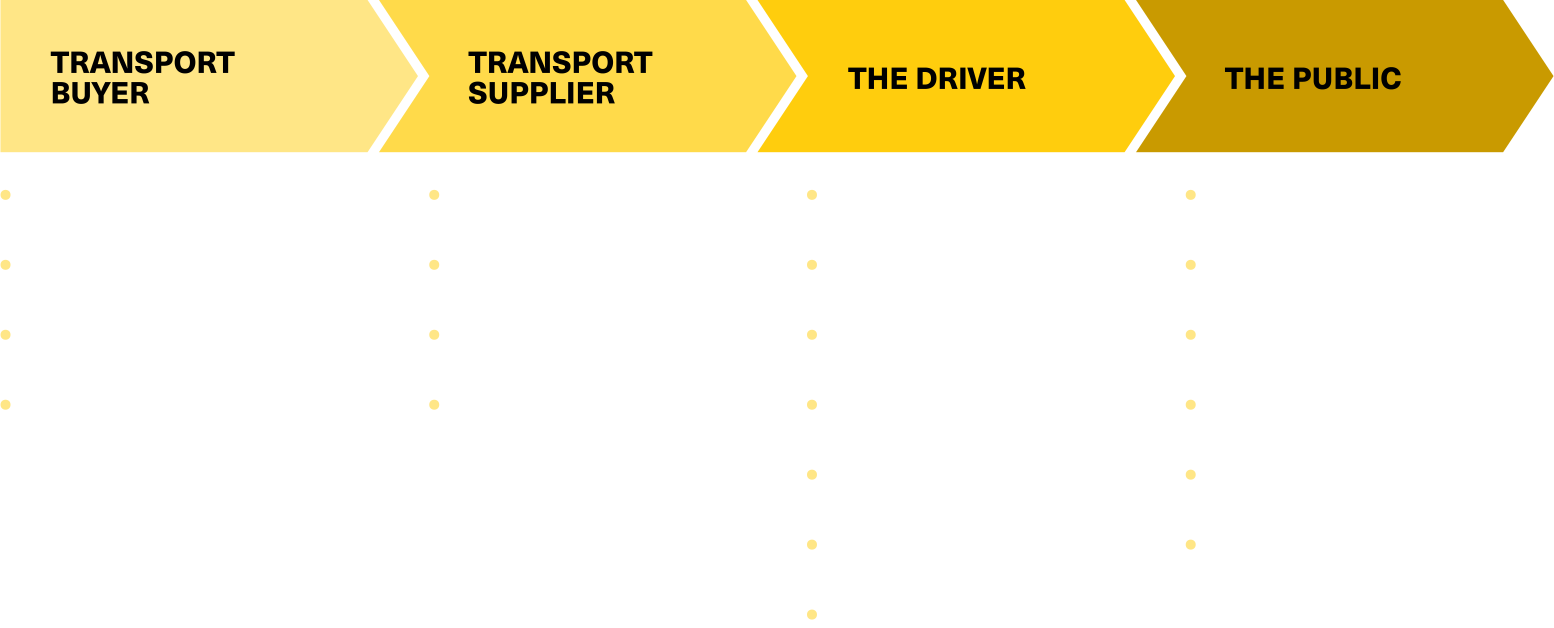
Rates, delivery windows and tender terms set at the top of the chain cascade downwards. A rate that does not cover the true cost of safe and legal operation does not make that cost disappear – it transfers the risk to drivers, and on to everyone sharing the road
For more on fatigue, working hours and work organisation, see the Risks Across Transport guidance.