
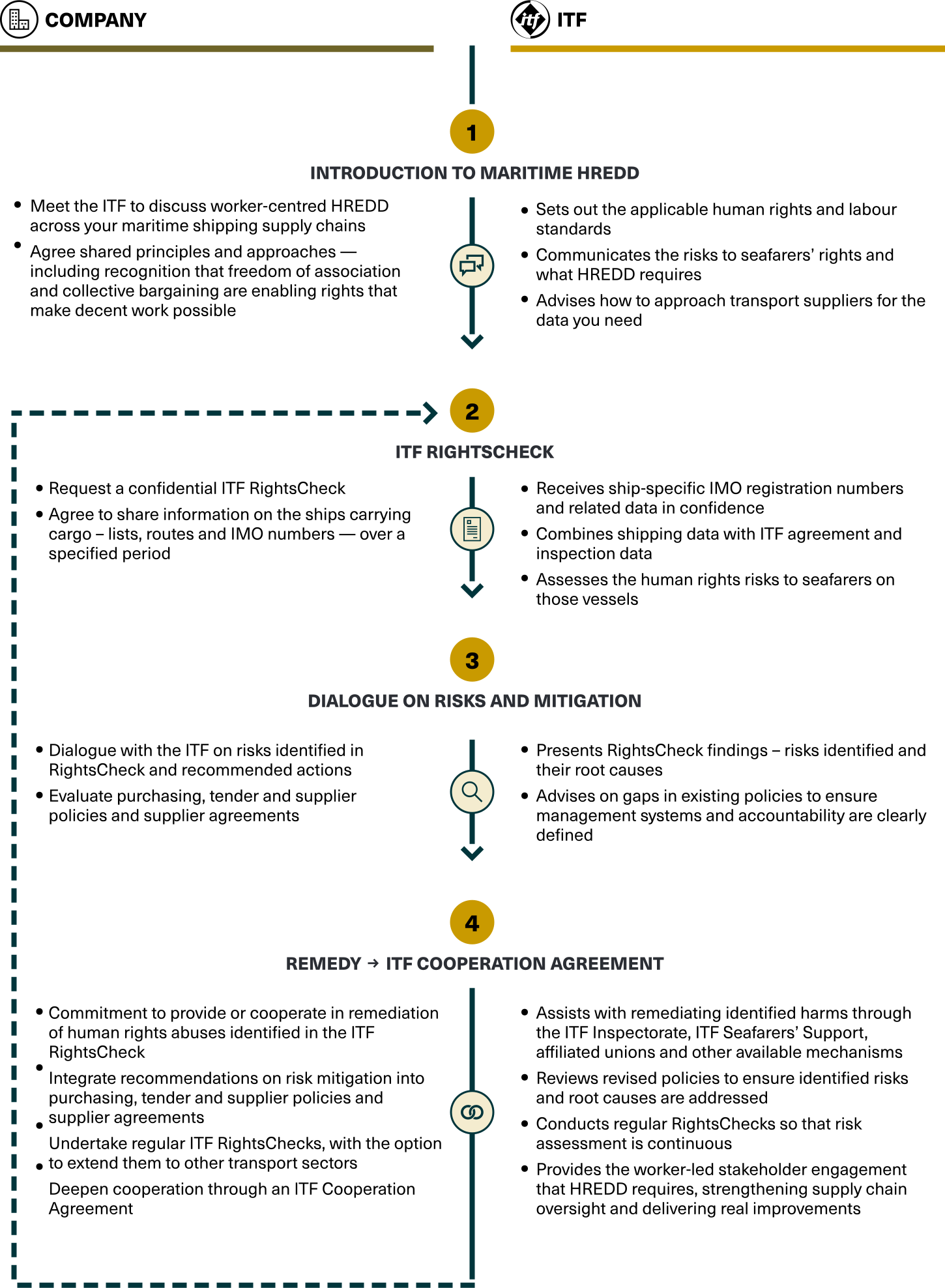
Working with the ITF on HREDD in maritime shipping follows four stages, each building on the last.
It begins with establishing what standards apply and which ships actually carry your goods, moves to an evidence-based assessment of the risks aboard them, opens a structured dialogue on what those risks reveal about your own purchasing and contracting practices; and ends with remedy where harm is found, and continuous monitoring so that the process does not stop at a single snapshot.
Working with the ITF on HREDD in maritime shipping follows four stages, each building on the last.
It begins with establishing what standards apply and which ships actually carry your goods, moves to an evidence-based assessment of the risks aboard them, opens a structured dialogue on what those risks reveal about your own purchasing and contracting practices; and ends with remedy where harm is found, and continuous monitoring so that the process does not stop at a single snapshot.
Based on the findings of an ITF RightsCheck companies can work with the ITF to take actions to prevent and mitigate risks in their supply chains. Three examples:
Engage with and build relationships with charterers, freight forwarders and logistics providers – who commit to moving cargo only on ships with an ITF Agreement, or national flag ships with an ITF-approved national collective bargaining agreement.
A commitment that isn't contractual isn't a commitment. Require shipping and logistics providers to attest to having ITF Agreements on their ships, make it a term in agreements, and require it to cascade to every subcontractor beneath them.
An agreement a seafarer has never seen cannot protect them. Require charterers to ensure seafarers know their rights and that the ITF Agreement covering the ship is available to the crew on board, and available when ITF inspectors come aboard.
For the full detail, including guidance on crew management and addressing root causes in pricing and tender models, see the ITF's Human Rights Due Diligence Guidance on respecting the human rights of seafarers in Supply Chains.